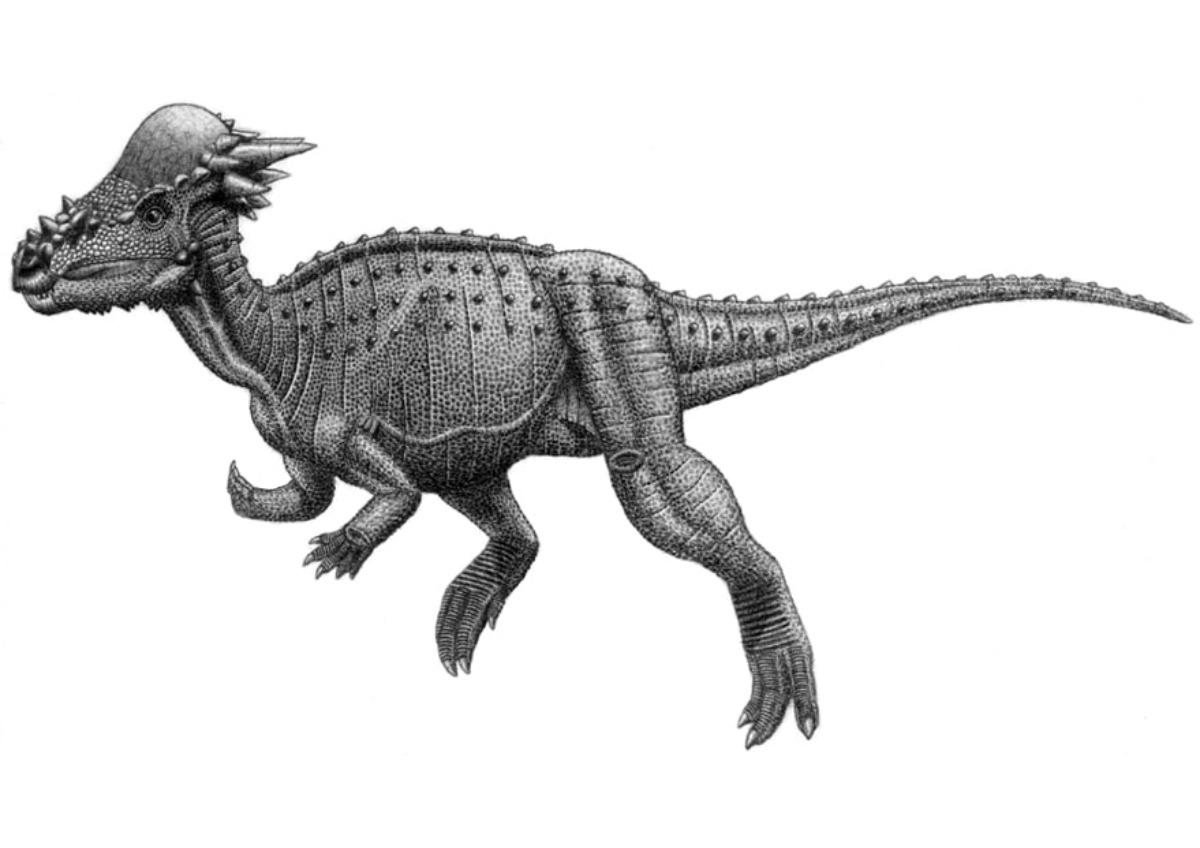
Stygimoloch

Stygimoloch spinifer
Stygimoloch is one of the more recent additions to the diaspora of paleontology. Not only do these local dinosaurs have a curious name, but they were also notable for their small size relative to the time period in which they lived.
In 1983, British paleontologist Peter M. Galton and German paleontologist Hans-Dieter Sues first described Stygimoloch. Fossils were discovered in the Hell Creek Formation in Montana, followed by discoveries in Wyoming.
Although more research is underway, there are many theories surrounding these dinosaurs from North America, which lived about 65 million years ago, in the Late Cretaceous Period.
| Profile | Stygimoloch |
|---|---|
| epoch | Late Cretaceous, 69.9 to 66 million years ago |
| Order | Bird-basin dinosaurs (Ornithischia) |
| Subordination | Cerapoda |
| Family | Marginocephalia |
| group | Pachycephalosauridae |
| genus | Stygimoloch |
| Art | Stygimoloch spinifer |
| Height | 1.7 meters |
| length | 3 – 5 meters |
| Weight | 450 kg |
| Locations | USA, North Dakota, Wyoming and Montana |
Basic appearance; biology
Stygimoloch is a herbivore or possibly an omnivore and belongs to the genus Pachycephalosaurs. It got its name because of the fearsome appearance of its domed, spiky and thick skull.
The term Stygimoloch has two word roots. The first, Stygi, comes from the Greek myth of Chiron, the ferryman of the River Styx. The final part, Moloch, comes from an ancient Hebrew god of the same name.
Physical properties
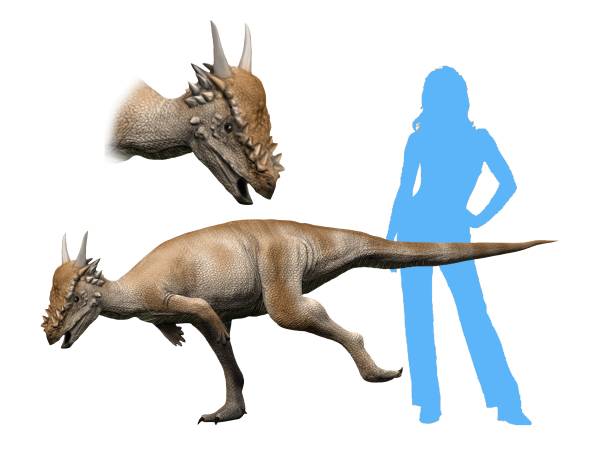
Stygimoloch was a small to medium sized creature with an estimated average length of around 3 – 5 meters and a weight of 45 kg. This makes him almost twice the size of an adult human. But unlike others in the Pachycephalosauria family, Stygimoloch was smaller and shorter. Stygimoloch spinifer was a bipedal dinosaur from the order Ornithischia. He had a large, powerful pelvic area and long, muscular hind legs. The upper body was lighter with a small and light head. He kept his tail, stiffened by ossified tendons, horizontal while running and thus served as a counterweight.
This body structure allowed this dinosaur to move quickly and agilely. An advantage when hunting. It is possible that he had a strong jumping or hopping gait.
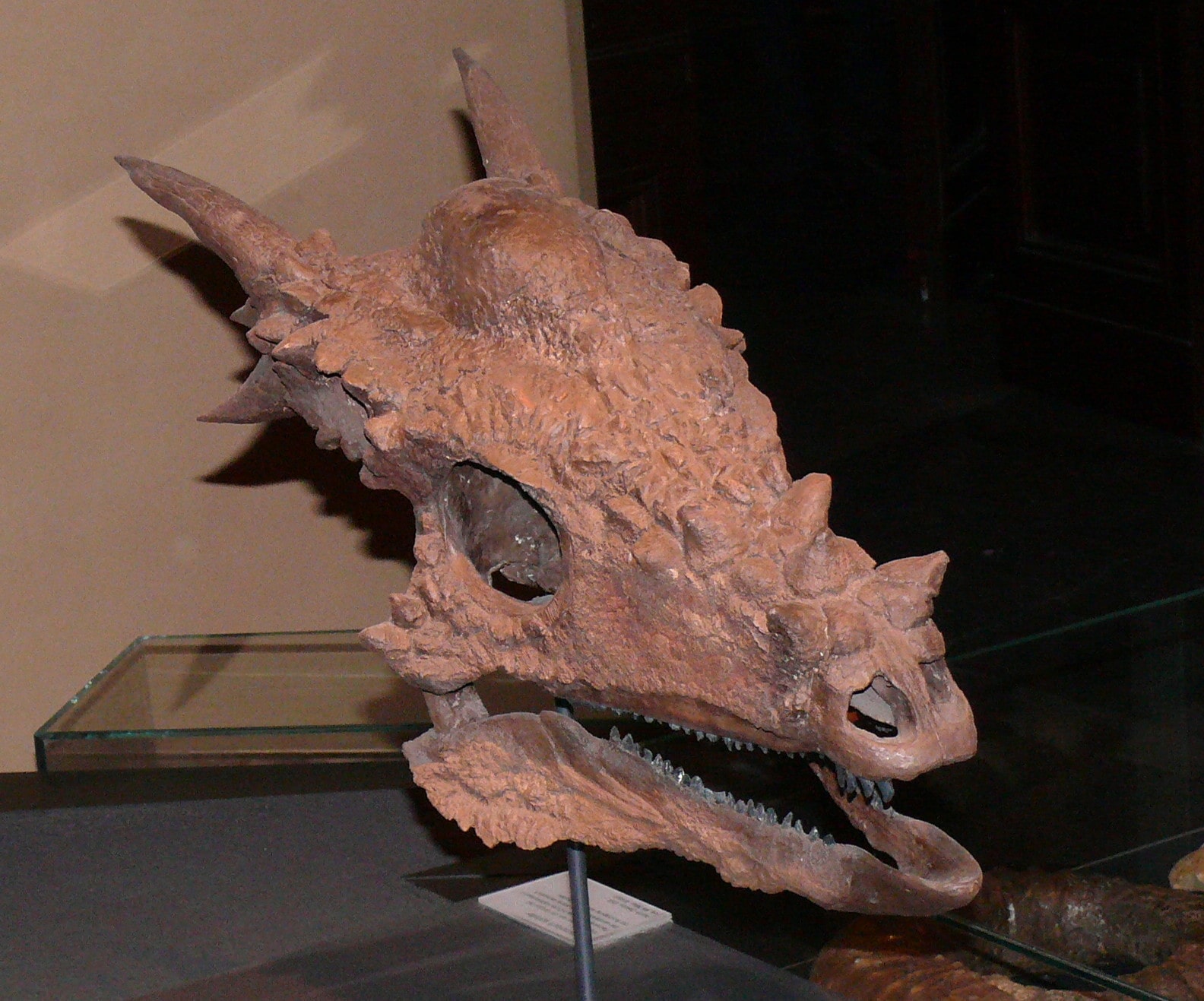
Stygimoloch's unusual feature was its thickened skullcap. This was formed from the frontal and parietal bones that grew together. This peak was clearly bulging and pointed.
Horns
The skull was covered with numerous small bony horns.
The two longest ones were at the back of his head. They were about 10 cm long and pointed backwards.
They may have served as defense against predators.
The function of the domed skullcap and horns is debated among paleontologists.
Scientists do not consider the assumption that these dinosaurs carried out ramming duels to be very likely. The skull dome is too pointed for these intraspecific fights and therefore the impact area is too small.
The opponents may have tried to attack the opponent's flanks.
Another line of thought assumes that the dome and horns were used for display and played a role in mate selection and identification.
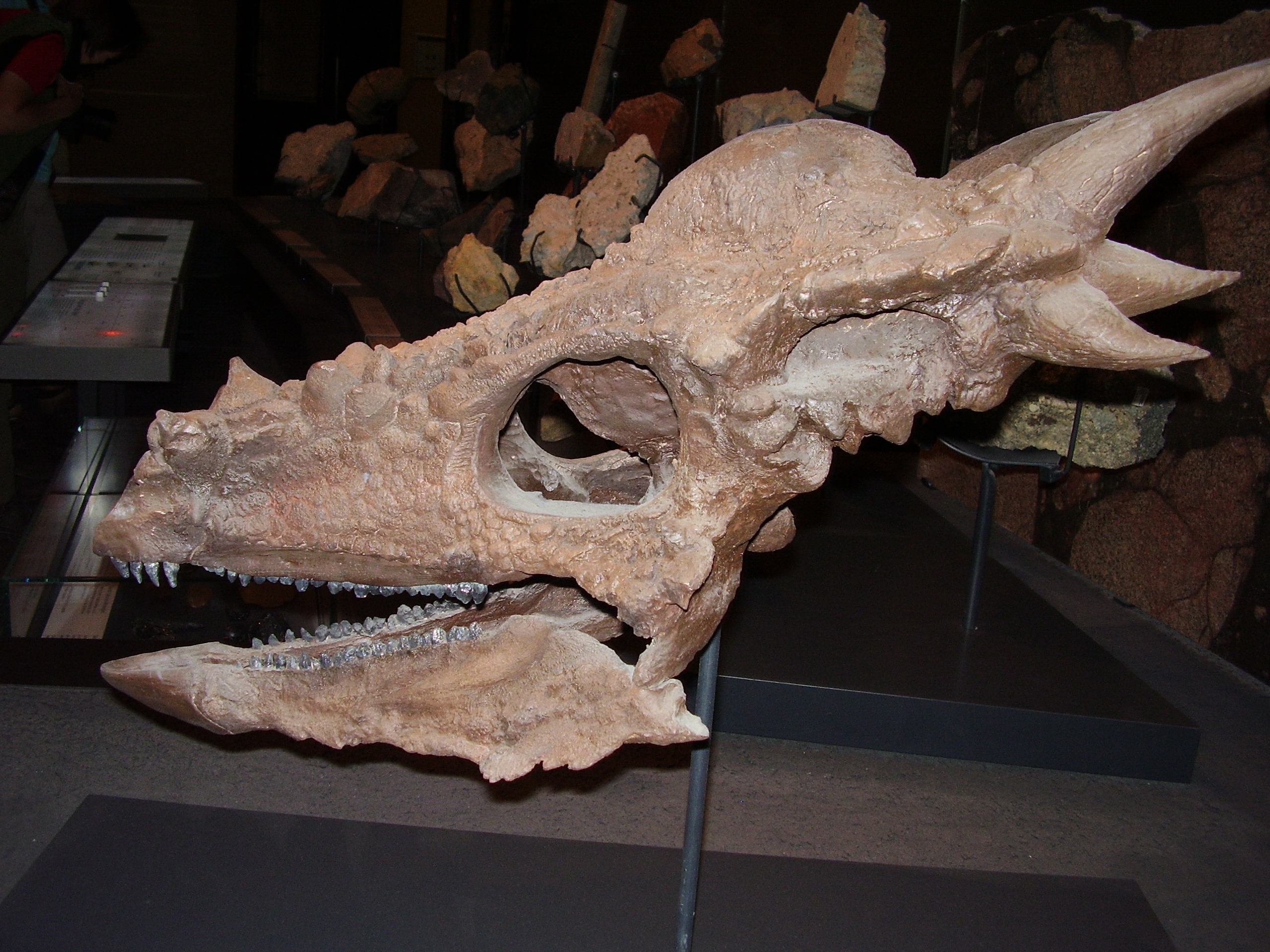
Skull; Horns determine age
Scientists have reason to believe that the dome developed with maturity and that juvenile Stygimoloche had a flatter surface on the top of the head. However, the dorsal horns were more pronounced in the younger Stygimoloch than in the older ones.
Nutrition
Although many researchers believe they were herbivores, there are some who consider this bizarre dinosaur to be an omnivore.
His teeth were small and ridged. Therefore, they were not suitable for chewing tough and fibrous plant material. Based on this fact, paleontologists assume that Stygimoloch ate a mixed diet of seeds, leaves and fruits.
The front teeth were blade-like and serrated, reminiscent in shape of the teeth of carnivorous theropods. This leads to the assumption that this dinosaur also ate meat.
Stygimoloch may have eaten many flowering plants and may have enjoyed eating eggs that fell from nests, small marsupials and early mammals while searching for plants and other plant food. Snails and insects were also possible components of his regular diet.
Stygimoloch is still little researched
This epic dinosaur deserves further study. As already mentioned, additional research and discoveries on Stygimoloch are necessary because most of what we know about him is still theory and not yet fact.
Image sources: Jordan Mallon, CC BY-SA 2.5 https://creativecommons.org/licenses/by-sa/2.5, via Wikimedia Commons
Skull reconstruction: Haplochromis, CC BY-SA 3.0 https://creativecommons.org/licenses/by-sa/3.0, via Wikimedia Commons
Größenvergleich: Nobu Tamura email:[email protected] http://spinops.blogspot.com/, CC BY-SA 4.0 https://creativecommons.org/licenses/by-sa/4.0, via Wikimedia Commons
Skull (Lebka): Meridas (Vladimír Socha), CC BY-SA 4.0 https://creativecommons.org/licenses/by-sa/4.0, via Wikimedia Commons