
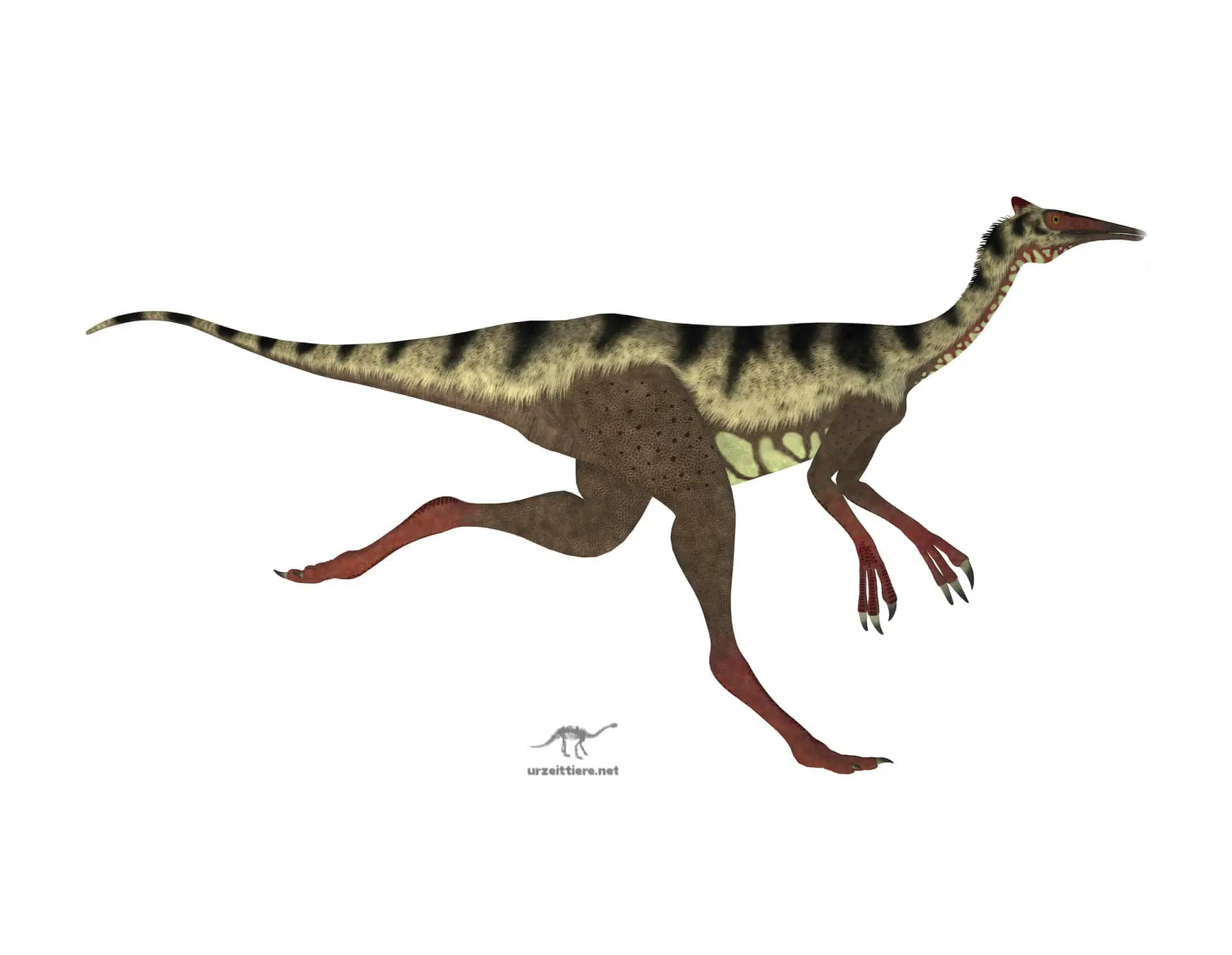
Pelecanimimus
Pelecanimimus is a small dinosaur that lived in the Lower Cretaceous period, about 130 million years ago. It was first discovered in July 1993 by Armando Díaz Romeral at the Las Hoyas Unit 3 site in Spain and later named and described by Bernardino Pérez Pérez-Moreno and his colleagues in 1994.
“pelican imitator”
One of the most interesting features of Pelecanimimus is its skull, which is unusually long and narrow, with a maximum length of about 4.5 times its maximum height. It also had an impressive number of teeth - about 220 very small teeth in total, including seven in each premaxilla (a small bone in the front part of the upper jaw). The name Pelecanimimus comes from the Latin word “pelecanus,” meaning pelican, and “mimus,” meaning mimic or “mimic,” which refers to the dinosaur's long snout and throat pouch. The species name “polyodon” comes from Greek and means “many teeth”.
Pelecanimimus is classified as an ornithomimosaur, a group of theropod dinosaurs known for their bird-like appearance and long, slender legs. It is considered the most basal member of the Ornithomimosauria, i.e. h. he is one of the oldest and most primitive members of this group. A 2005 study by Makovicky et al. Cladistic analysis carried out confirmed this classification of Pelecanimimus within the Ornithomimosauria.
Overall, Pelecanimimus is a fascinating dinosaur that helps us better understand the evolution of ornithomimosaurs and the early diversification of theropod dinosaurs. Its unique skull and large number of teeth set it apart from other members of its group and make it a valuable addition to our knowledge of the prehistoric world.
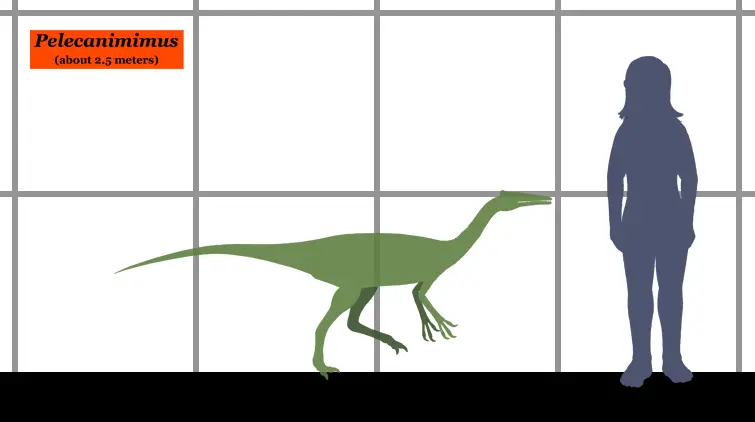
| length | 1.9 meters |
| Weight | 17 kilograms |
| locomotion | Two-legged |
| food | Carnivores possibly fish |
Systematics
Saurischia
Eusaurischia
Theropoda
Neotheropoda
Averostra
Tetanurae
Orionides
Avetheropoda
Coelurosauria
Tyrannoraptora
Maniraptoriformes
Ornithomimosauria
Occurrence in time
chalk
Lower Cretaceous
late Barremian
Happen
Europe
Country: Spain
Region: Castilla-La Mancha
Formation: Calizas de La Huérguina
Image source: Conty, CC BY 3.0, via Wikimedia Commons