Patagonykus
Physical characteristics
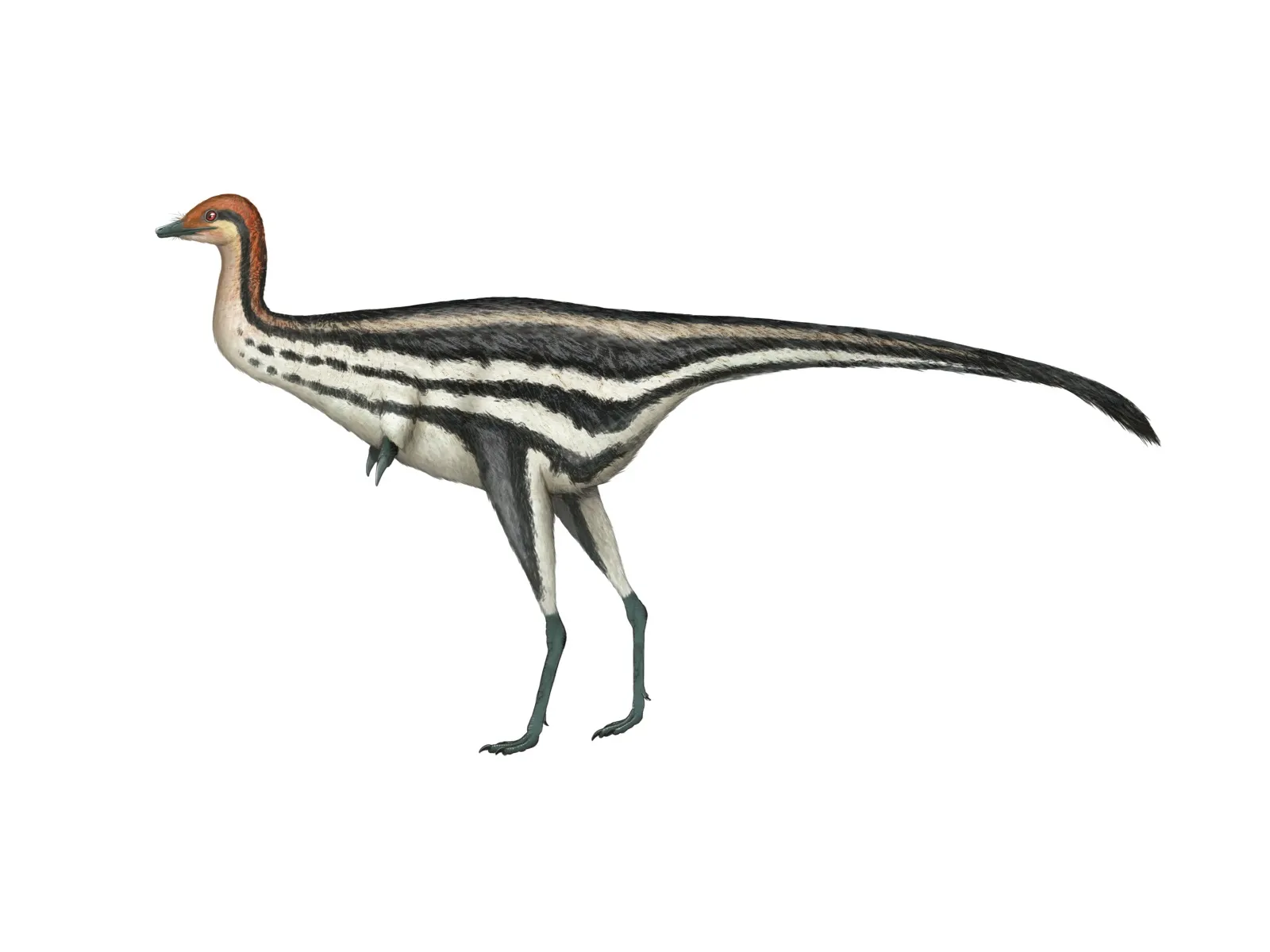
Patagonykus puertai was about 2 meters long. The dinosaur had a light, graceful physique typical of Alvarezsaurs and was estimated to have weighed between 5 and 15 kilograms. This small theropod moved on two legs, supported by powerful hind legs.
Skeletal features
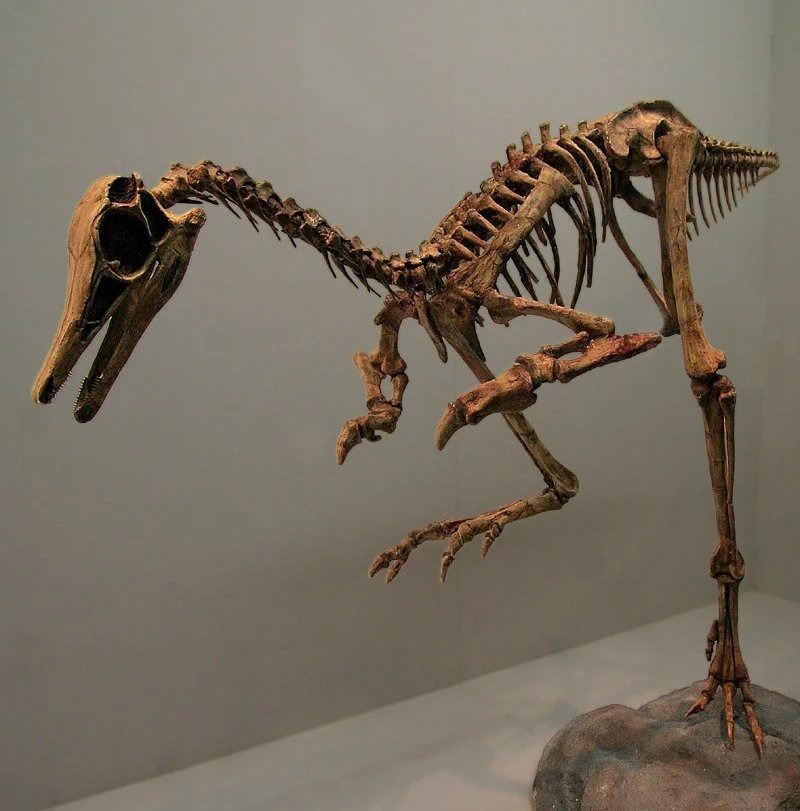
The fossil remains include a partial skeleton without a skull. The spine contains several vertebrae, including caudally keeled synsacral vertebrae. The shoulder girdle features a coracoid bone, while the pelvic girdle and parts of the hind legs were also preserved.
The humerus shows a pronounced specialization, characterized by an unusually robust internal hump.
Limb structure
The forelimbs of Patagonykus were reduced and highly specialized. The hind limbs were robust and well developed for bipedal locomotion. A second specimen, discovered in 2003, preserved only a single finger, expanding our understanding of the animal's finger morphology.
Diet and behavior
The anatomical findings indicate an insectivorous diet. The specialized structure of the forelimbs suggests that these limbs served to penetrate insect nests, particularly those of colonial insects such as termites or ants.
Scientific classification
Patagonykus belongs to the Alvarezsauridae family within the Maniraptora (Coelurosauria, Theropoda). The genus falls into the subfamily Patagonykinae and represents a basal South American lineage located between Alvarezsaurus calvoi and the more evolved Parvicursorinae.
discovery
Paleontologists discovered the first Patagonycus fossils in Argentina's Neuquén Province in Patagonia in 1994. The specimens came from the Portezuelo Formation. The fragmentary holotype includes various skeletal elements but lacks the skull.
Technical data
Location: Portezuelo Formation, Neuquén Province, Argentina
First discovery: 1994
Type species: Patagonykus puertai
Named by: Novas (1997)
reference
Novas, F. E. (1997): Anatomy of Patagonykus puertai (Theropoda, Avialae, Alvarezsauridae), from the Late Cretaceous of Patagonia. Journal of Vertebrate Paleontology, 17(1): 137-166.
Patagonykus
| scientific name | Patagonykus puertai |
| Estimated size | Length: 2.8 meters Height: 0.70 meters Weight: 15 kilograms |
| geological era | Upper Cretaceous |
| Locations | Portezuelo |
| Order | Saurischia |
| Subordination | Theropoda |
Physical characteristics
| anatomy | Small, light and gracefully built; Bipedal runner with greatly shortened, muscular forearms and a single dominant claw claw |
| Special features | Extremely robust, single-clawed forearm - probably used for hacking open insect burrows; synsacral vertebrae with ventral keel |
| locomotion | Two-legged |
| Skin texture | Not recorded in fossils; As a close relative of birds and other feathered Maniraptors, protofeathers or feathers are suspected, but not directly proven |
| Coloring | Unknown – cannot be found in fossils; speculatively cryptic-brown or streaky as in small modern birds |
discovery
| Explorer | Novas |
| Discovery date | 1996 |
| Meaning of the name | “Patagonian claw” (Greek onykos = claw + Patagonia as the region of origin) |
| Significant fossil finds | Partial skeleton without skull, associated cervical vertebrae, postzygopophysis (lower articular process, which forms the facet joint together with the prezygapophysis (upper articular process) of the subsequent vertebra), first finger bones (phalanx I-1) and proximal fingernail (ungual I). |
In paleontology, the ratio of brain to body size, the so-called Encephalization quotient (EQ), used as a rough guide to relative intelligence.
| Intelligence (EQ) | No documented value; as a small Maniraptor, probably moderate (EQ ~0.5-1.0), comparable to basal birds - higher than average dinosaurs, but well below troodontids |
| Social behavior | Unknown; Possibly solitary or forming small groups as suspected with related small theropods |
| Predators | Large theropods of the Portezuelo Formation such as Megaraptor or abelisaurid predatory dinosaurs from Patagonia |
Image sources:
Post image: GabrielNU, CC BY-SA 4.0, via Wikimedia Commons