Orodromeus

Orodromeus makelai – The “mountain runner”
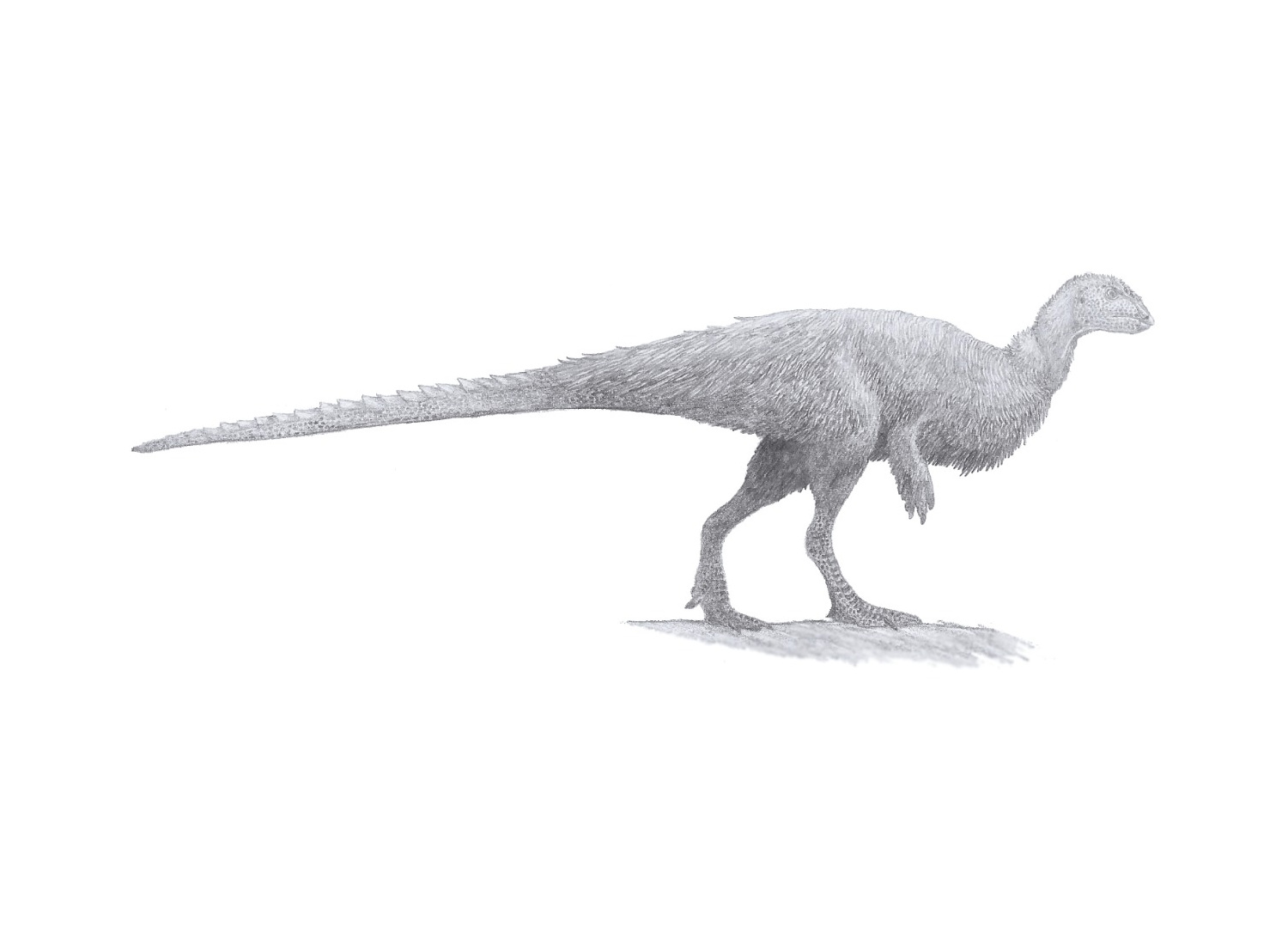
Orodromeus makelai “Mountain Runner” – While it may not be one of the most iconic dinosaurs, nor one that paleontologists have done much research on, it is certainly a dinosaur worth talking about. Because the more we know about dinosaurs, the more we know about how they lived, what their world looked like and how they developed.
Description
Unfortunately we do not have a complete description of Orodromeus, sometimes known as the mountain runner (this is the direct translation of Orodromeus)
The problem is that we haven't discussed that many fossils and no paleontologist has been able to publish a complete description of the dinosaur. This means that, unfortunately, there is still a huge debate about what Orodromeus looked like.
Orodromeus makelai is a primitive ornithopod. It was a small herbivore that walked on two legs (bipedal).
Orodromeus was about 2.5 meters long. He must not have weighed more than 20 kg.
| Profile | Orodromeus |
|---|---|
| epoch | Upper Cretaceous (Middle to Upper Campanian) 80.6 to 72 million years ago |
| Order | Bird-basin dinosaurs (Ornithischia) |
| Subordination | Cerapoda |
| Family | Parksosauridae |
| group | Orodrominae |
| genus | Orodromeus |
| Art | Orodromeus makelai |
| Height | 0.6 meters |
| length | 2.5 meters |
| Weight | 20kg |
| Locations | North America (USA and Canada) |
Did Orodromeus makelai have feathers?
It is generally believed that this dinosaur had feathers, but there is currently no clear evidence that the Orodromeus makelai was feathered.

Orodromeus makelai was precocial
When Orodromeus was discovered, a clutch of eggs was found near its skeleton.
One of these well-preserved nests contained 19 eggs laid in a spiral.
Researchers suspected that these eggs also belonged to Orodromeus. However, the assignment has not yet been clearly clarified.
Some eggs in the clutch contained fully developed embryos.
When the hatchlings were examined, its joints were found to be well developed. This fact indicates that the hatchlings were able to leave the nest immediately after hatching.
The thesis of nest escape is also supported by the fact that the eggshells in the nesting area were less trampled than in other dinosaur genera.
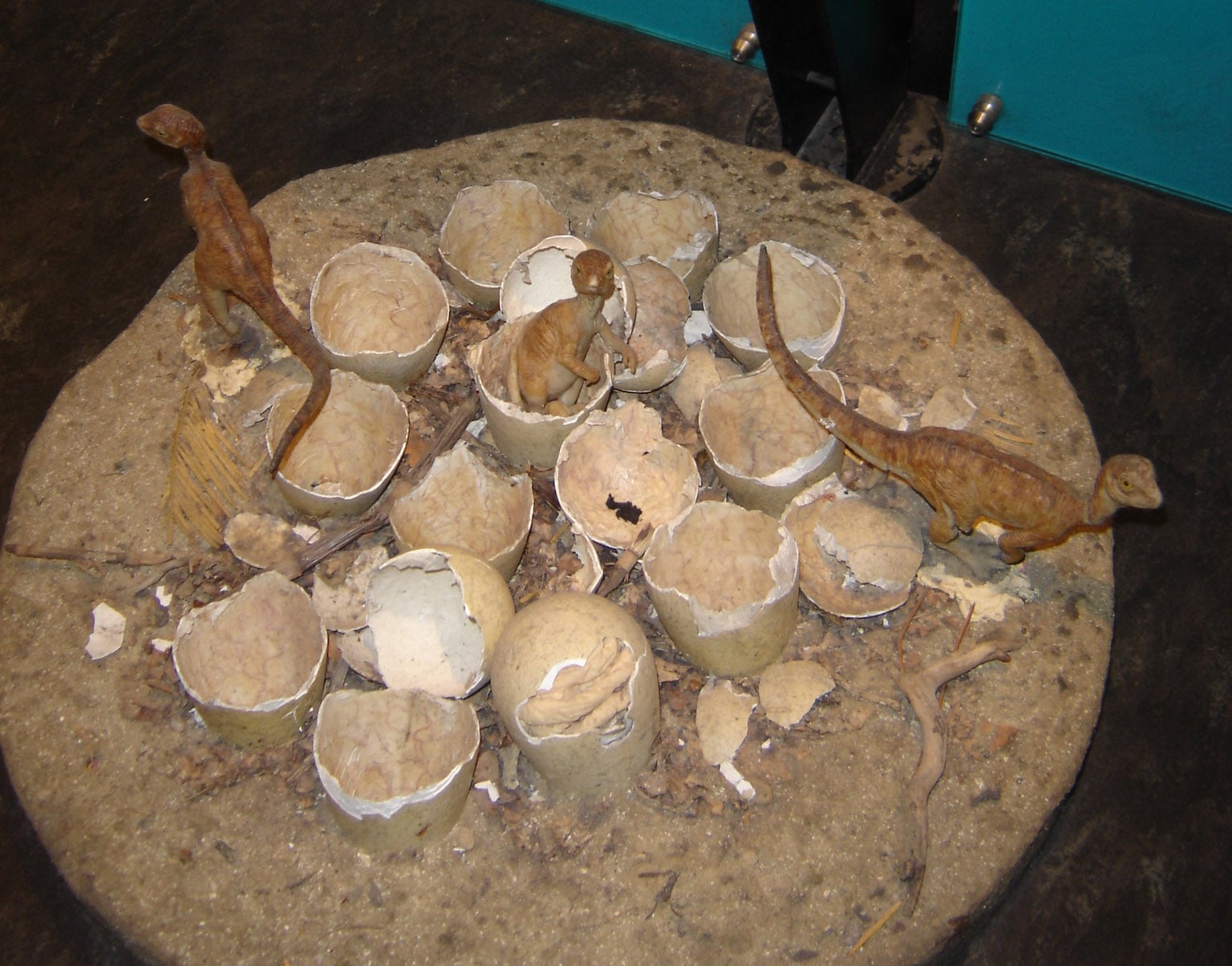
The parents were therefore not forced to engage in intensive brood care. After hatching, the young animals were immediately able to look after themselves.
Was Orodromeus makelai a cave dweller?
Orodromeus is believed to have been a dinosaur that dug and inhabited nesting cavities.
Although no evidence of a cave was found when its bones were found, the skeletons of two individuals were very close to each other, suggesting that the two animals were lying in a cave at the time of their death.
In addition, some anatomical features similar to those of Oryctodromeus, a close relative, indicate the ability to dig burrows. His arms and shoulders were extremely muscular.
Oryctodromeus dug burrows similar to those dug by modern hyenas.
Nutrition
In the past there was a small debate about whether the Orodromeus was an omnivore or a herbivore. Most paleontologists have now agreed on the idea that it was a herbivore.
The Orodromeus has a so-called horn beak. This enabled him to break down tough vegetation. They also have teeth in the jaw that are designed to crush the plant matter.
It is likely that the Orodromeus primarily eats the toughest plants imaginable. Their small size means they probably wouldn't have been able to eat anything taller than 1 meter.
Living environment
The first Orodromeus fossil was found in Montana, in the Two Medicine Formation, often referred to as Egg Mountain.
This dinosaur lived in the late Cretaceous period. That's about 100 million to 66 million years ago. The dinosaur lived 80 to 74 million years ago, as we know that Egg Mountain was dated to that time. This time period was known as the Campanian Stage. While there was vegetation in the area, the dinosaur would have lived in a rather dry climate. There would have been a little rain now and then, but most of it would have been blocked. This means that there would have been a lot of droughts in the area. In fact, paleontologists believe that many of the dinosaurs around Egg Mountain would have died due to lack of water.
The dinosaurs probably would have eaten conifers and ferns. However, if the area experienced a large amount of drought, then there may have been long periods where the dinosaur did not have access to a steady stream of food.
Image sources: By Tomopteryx – Own work, CC BY-SA 3.0, https://commons.wikimedia.org/w/index.php?curid=28685699
Model nest and hatchlings of Orodromeus makelai: By The original uploader was Elapied at French Wikipedia. – Transferred from fr.wikipedia to Commons by Esp2008 using CommonsHelper., CC BY-SA 2.0 fr, https://commons.wikimedia.org/w/index.php?curid=7360971
Size comparison: By Steveoc 86 – Own work, CC BY-SA 4.0, https://commons.wikimedia.org/w/index.php?curid=70561313