
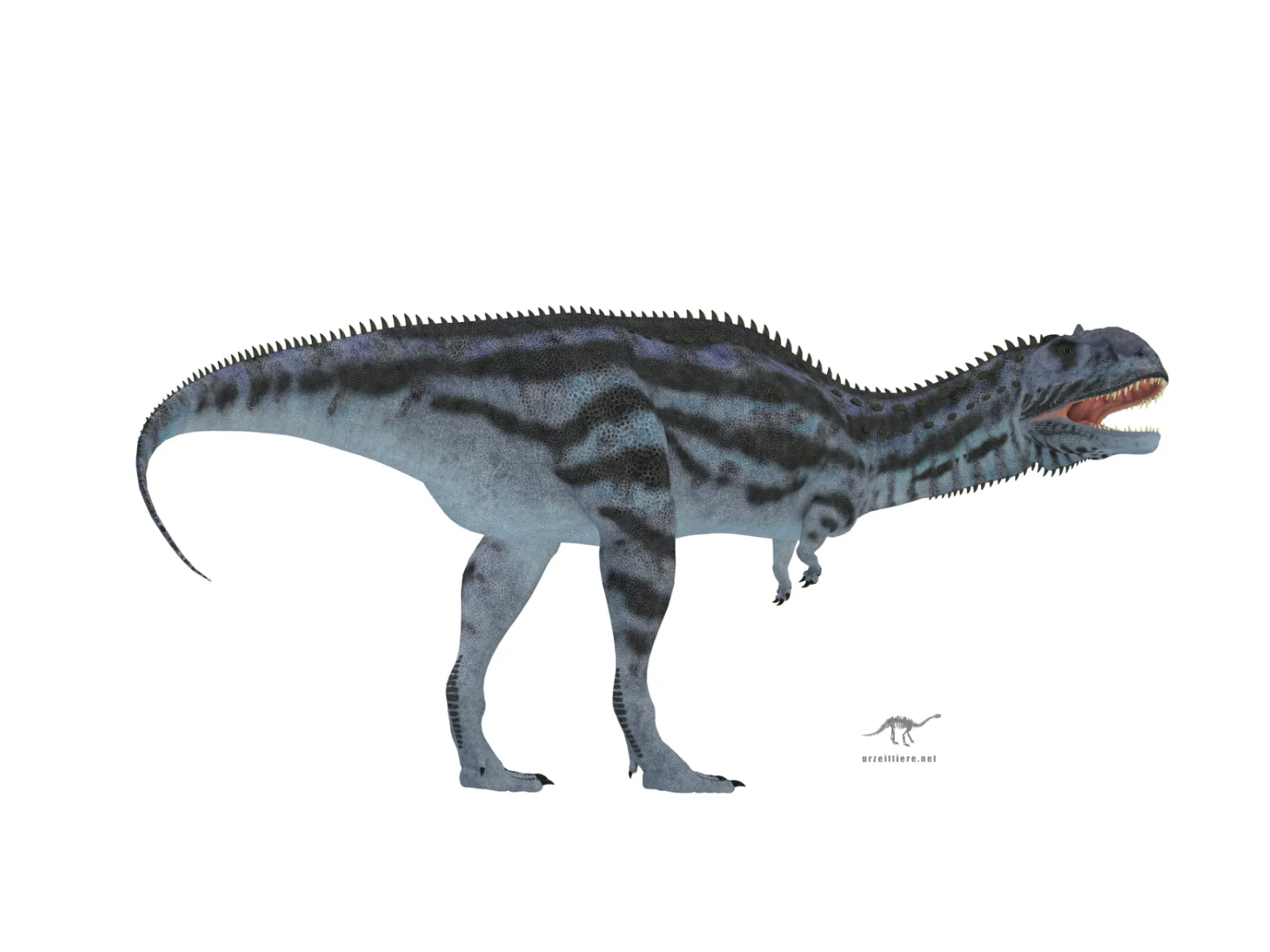
Majungasaurus
Majungasaurus crenatissimus: The apex predator of the Late Cretaceous of Madagascar
During the Late Cretaceous Period, which spanned from 100.5 to 66 million years ago, various theropod dinosaurs dominated the world. Among these impressive creatures evolved Majungasaurus crenatissimus to become a dominant predator on the isolated landmass of Madagascar. This abelisaurid theropod, with its distinctive features and specialized adaptations, offers a fascinating insight into the unique evolutionary paths that dinosaurs took in isolated ecosystems.
Taxonomy and discovery
Majungasaurus crenatissimus, which belongs to the family Abelisauridae, was first described in 1896 from fragmentary remains. At first it was assigned to various genera, including Megalosaurus, and it was not until 1955 that the paleontologist René Lavocat established the genus Majungasaurus. The species name “crenatissimus” refers to the numerous saw edges on its teeth, a characteristic feature of this predator.
Anatomical features
Skull and teeth
The skull of the Majungasaurus crenatissimus was about 60–70 cm long and was characterized by a short, deep structure with a rounded snout. A distinctive feature was the textured, thickened bone on the top of the skull, forming a dome-like structure. This skull dome may have been used for display purposes or to give the skull additional strength.
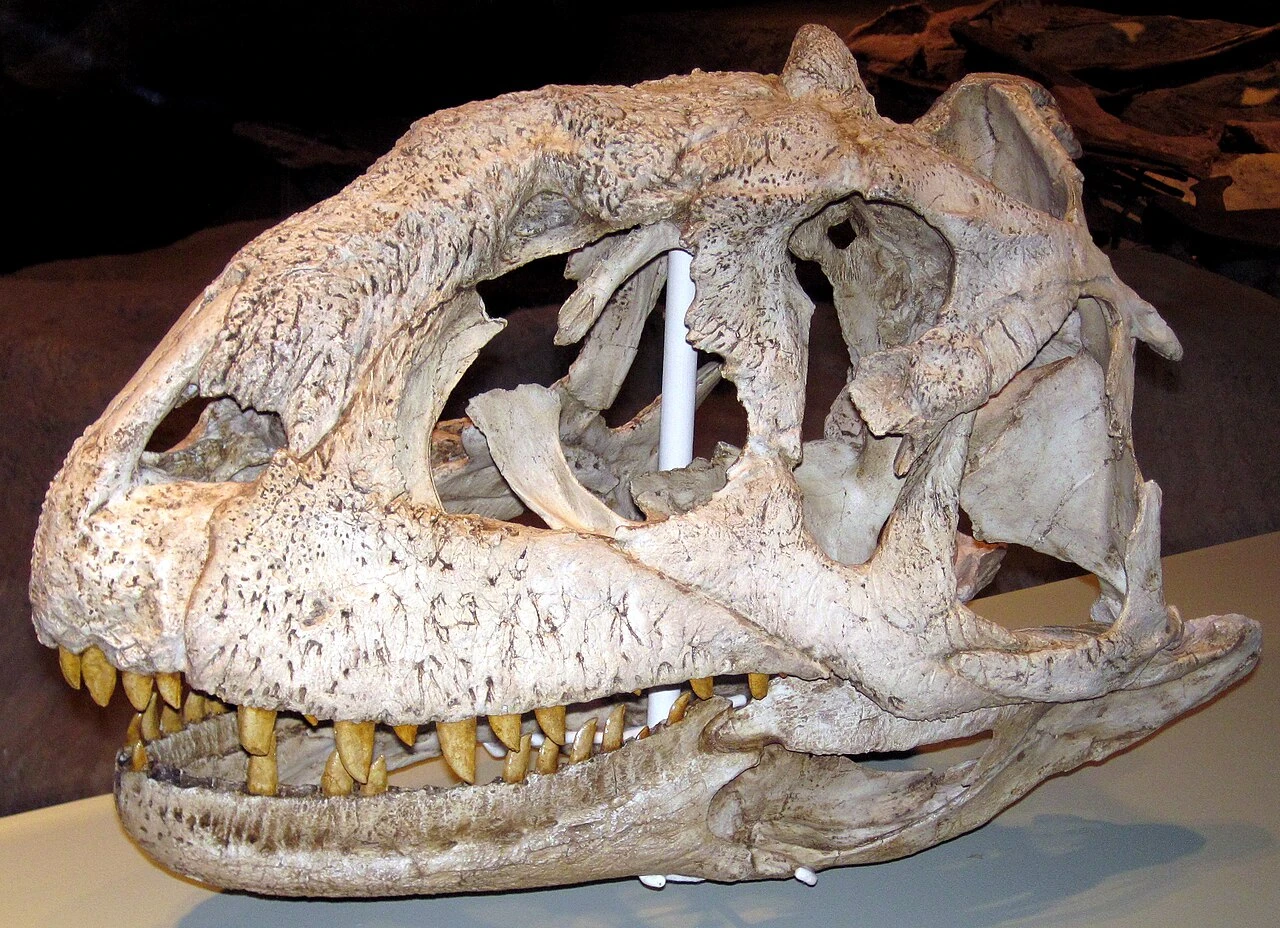
The jaws of Majungasaurus crenatissimus contained 17 teeth in each upper jaw and 19 teeth in each lower jaw. These teeth were sturdy, conical, and heavily serrated, ideal for slicing through flesh and crushing bone.
anatomy
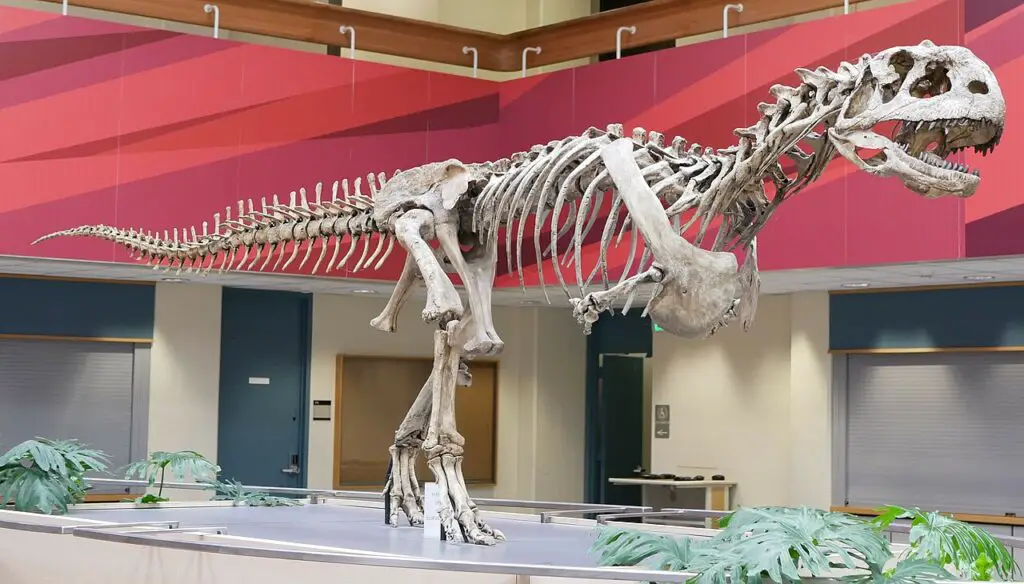
Majungasaurus crenatissimus had a body length of 6 to 7 meters and an estimated weight of 1,100 kg. Its forelimbs were significantly shortened, a common feature in abelisaurids, suggesting minimal use in prey capture. In contrast, the hind legs were strong and powerful, indicating strong bipedal posture and locomotion.
Paleobiology and behavior
Diet habits
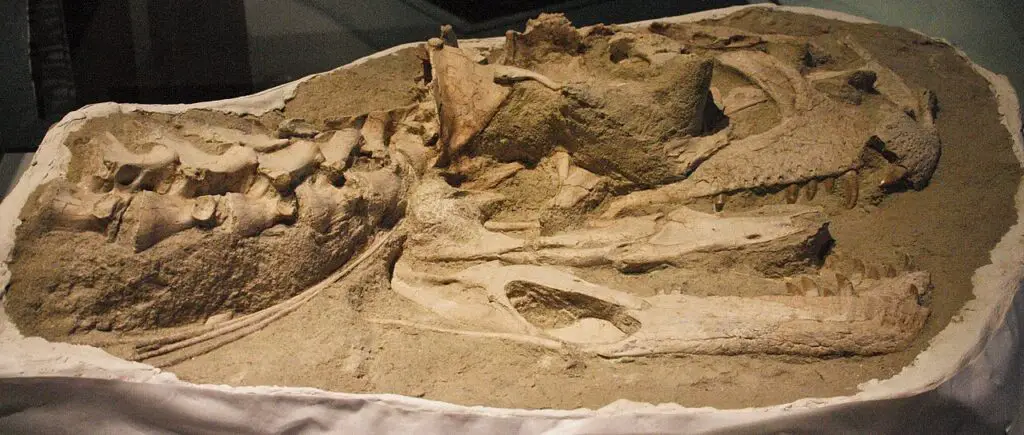
The analysis of fossils of Majungasaurus crenatissimus gives interesting insights into his eating behavior. Teeth marks on other people's bones Majungasaurusindividuals suggest possible cannibalistic tendencies, a behavior rarely documented in theropod dinosaurs. This finding suggests that Majungasaurus crenatissimus may have been an opportunistic hunter, consuming both fresh prey and carrion when necessary.
Hunting strategies
The robust skull and powerful bite force of the Majungasaurus crenatissimus suggest that it was capable of overpowering large prey. Its likely prey included sauropods such as Rapetosaurus, which shared its habitat. The strong hind legs and the powerful physique of the Majungasaurus are an indication that he was more concerned with strength than speed, and may have used ambush tactics to capture his prey.
Paläoökologie
During the Late Cretaceous, Madagascar had already separated from other landmasses and created a unique island ecosystem. Majungasaurus crenatissimus occupied the niche of apex predator in this isolated environment, which encouraged the development of endemic species.
The Maevarano Formation, where fossils of Majungasaurus were discovered represents a semi-arid environment with seasonal rainfall. This challenging climate likely influenced the adaptations and behaviors of Majungasaurus crenatissimus and shaped its development as a resilient and opportunistic predator.
Evolutionary significance
Die Untersuchung von Majungasaurus crenatissimus illustrates the evolutionary developmental trajectories of abelisaurid theropods in isolated environments. Its unique features, such as shortened forelimbs and robust skull, illustrate the specialized adaptations that emerged in response to the specific ecological pressures of Madagascar in the Late Cretaceous.
In addition, this offers Majungasaurus crenatissimus observed potential cannibalistic behavior provides insights into the complex ecological interactions and survival strategies of apex predators in resource-limited island ecosystems.
Current research and discoveries
Ongoing paleontological investigations continually provide new information about Majungasaurus crenatissimus revealed. Recent studies have focused on its sensory abilities, growth patterns and potential social behavior. Analysis of skull casts (endocast) shows that Majungasaurus had well-developed olfactory bulbs, suggesting a keen sense of smell that would have been advantageous for both hunting and scavenging.
Growth studies based on bone histology show that Majungasaurus crenatissimus experienced rapid growth in its early years and reached sexual maturity relatively quickly. This growth strategy may have been an adaptation to the challenging and unpredictable environment of Madagascar in the Late Cretaceous.
conclusion
Majungasaurus crenatissimus is a testament to the different evolutionary paths that theropod dinosaurs took during the Late Cretaceous. Its unique adaptations, from its robust skull to its potential cannibalistic behavior, reflect the complex interplay between evolutionary pressures and ecological constraints in an isolated island ecosystem.
As paleontological research advances, our understanding of Majungasaurus crenatissimus and its role in the ancient Malagasy ecosystem. This fascinating predator not only sheds light on the diversity of theropod dinosaurs, but also provides valuable insights into the evolutionary processes that shape apex predators in isolated environments.
Die Erforschung von Majungasaurus crenatissimus ist nach wie vor ein aktives Forschungsgebiet, das weitere Entdeckungen verspricht, die unser Verständnis der Dinosaurierentwicklung, der Paläoökologie und der komplexen Dynamik prähistorischer Ökosysteme verbessern werden.
Systematics
| Dinosauria |
| Saurischia |
| Eusaurischia |
| Theropoda |
| Neotheropoda |
| Averostra |
| Ceratosauria |
| Neoceratosauria |
| Abelisauroidea |
| Abelisauria |
| Abelisauridae |
| Majungasaurinae |
Occurrence in time
| chalk |
| Upper Cretaceous |
| Maastrichtian |
Happen
| Area | Africa |
| country | Madagascar |
| region | Mahajanga |
| formation | Maevarano |
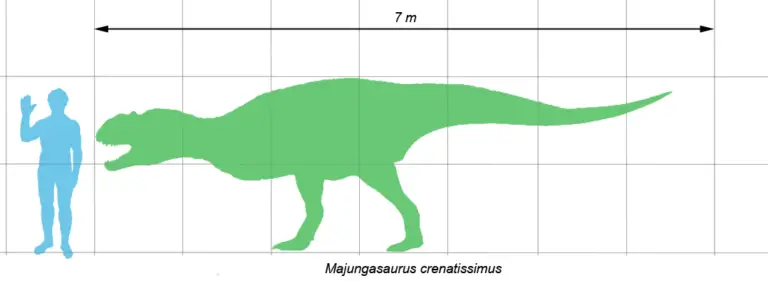
| length | 7 meters |
| Weight | 850 kg |
| locomotion | Bibinous |
| food | Carnivores |
Image sources:
Size comparison: Credit Matt Martyniuk (Dinoguy2) and ArthurWeasley, CC BY-SA 3.0, via Wikimedia Commons
Skeleton: Skye McDavid, CC BY 4.0, via Wikimedia Commons
Skull: James St John, CC BY 2.0, via Wikimedia Commons
Fossil of skull and neck: CaptMondo, CC BY-SA 3.0, via Wikimedia Commons