
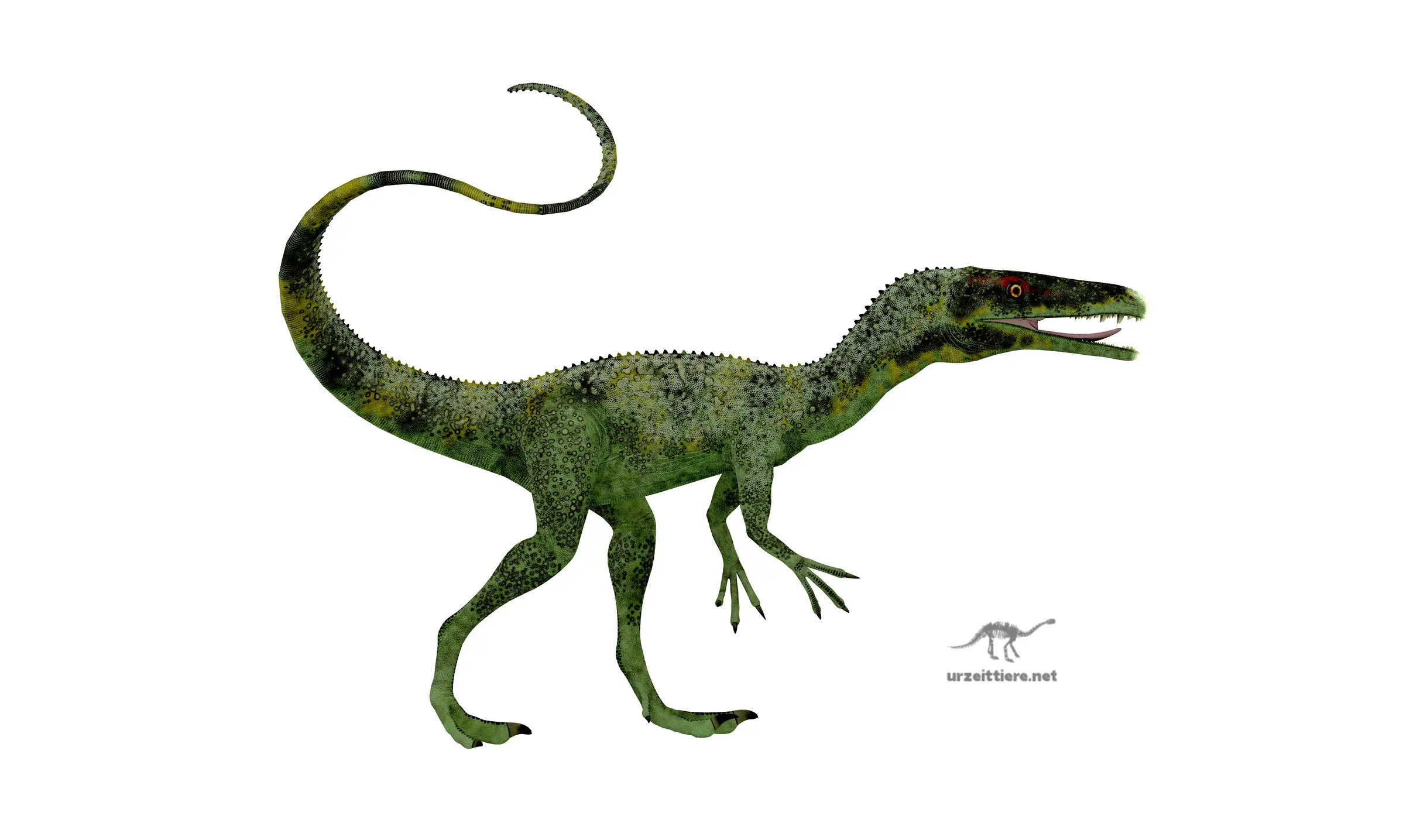
Juravenator
Juravenator starki
Juravenator starki was a fairly small carnivorous dinosaur. Its length was only about 75cm. Weighing just 250 grams, the bipedal theropod was likely an agile hunter.
Juravenator was discovered in 1998 by brothers Klaus-Dieter and Hans-Joachim Weiß in the Stark family's chalk quarry near Schamhaupten (Bavaria).
After part of the fossil was prepared, it was given the nickname "Borsti". It was initially assumed that Juravenator had protofeathers. However, the complete restoration carried out later could not confirm this assumption.
The Juravenator starki fossil is exceptionally well preserved. Foreign bodies discovered inside the fossil suggest that the dinosaur drowned in the sea.
“Hunters of the Jura Mountains”
The genus name is derived from the name of the Jura Mountains and the Latin venator, “hunter”.
The specific name “starki” was given in honor of the owners of the limestone quarry, the Stark family.
Behave
Juravenator may have been nocturnal. Its scleral rings are very similar to those of modern birds and reptiles. However, this theory is not certain, as the only known specimen was a young animal.
Crocodile-like sensory scales
A 2020 study by researchers Bell and Hendrickx suggests that Juravenator may have possessed integumentary sensory organs on scales on the sides of its tail. Such sensory scales are known from crocodiles.
They are used to detect the movements of prey animals.
If the discovery of the round structures on the scales is confirmed to be sensory organs, it would be the first evidence of sensory organs on the skin of dinosaurs.
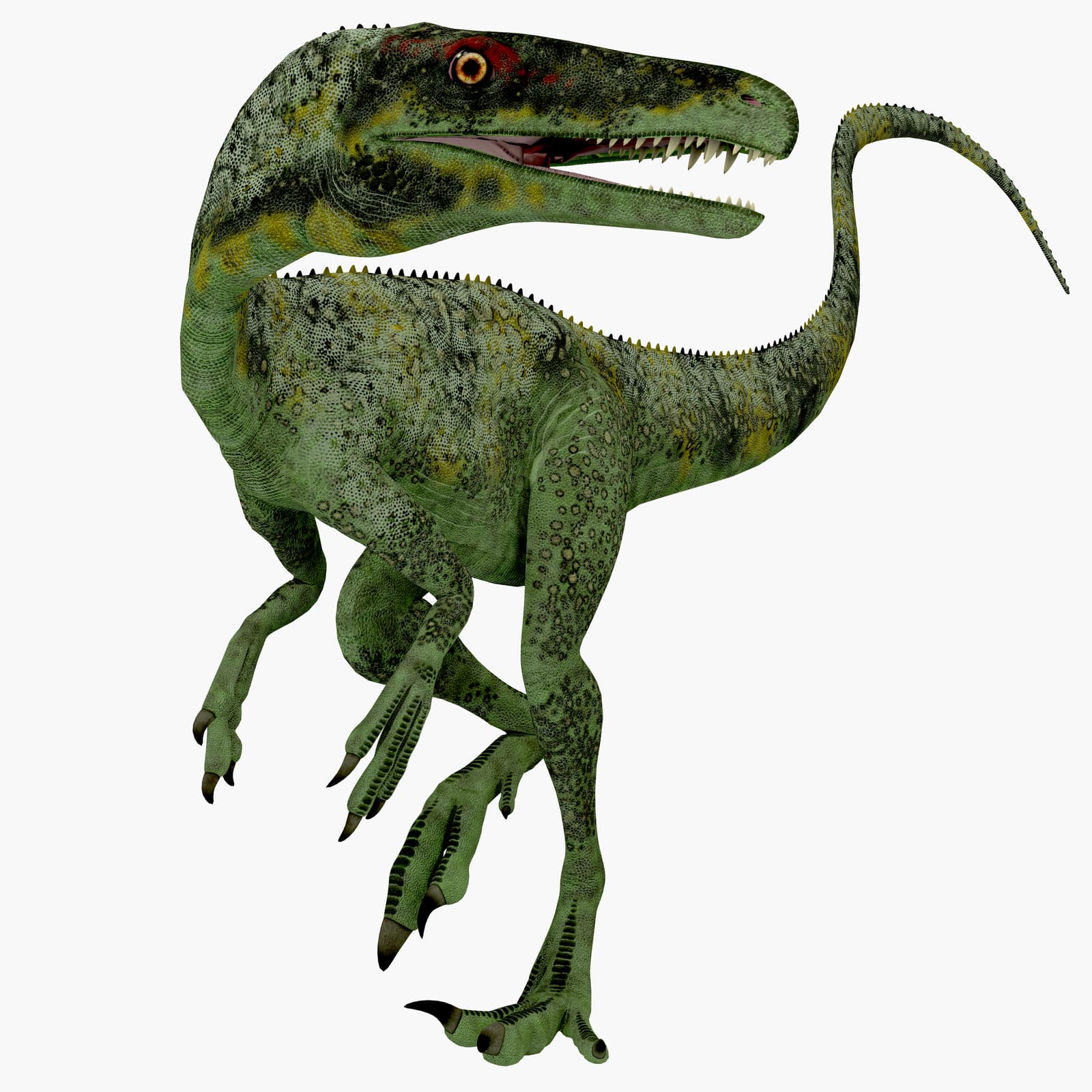
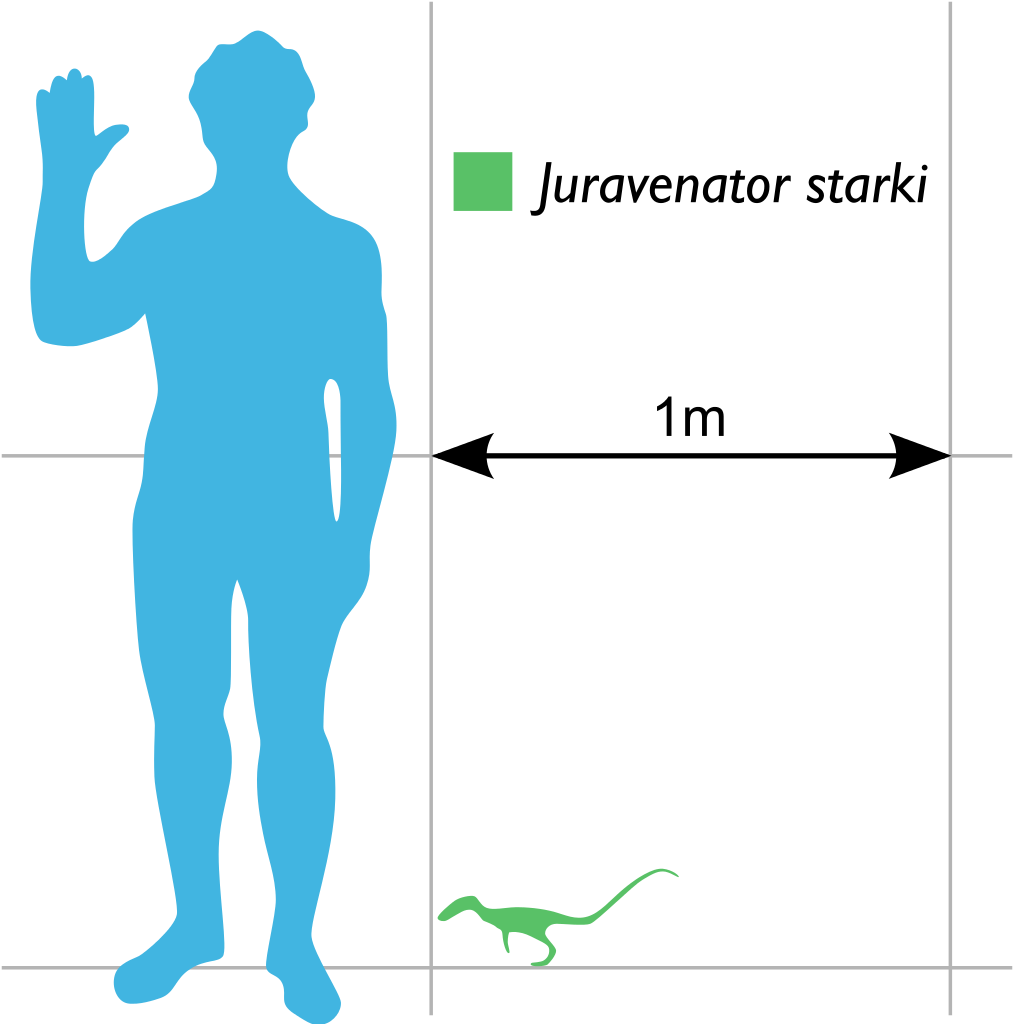
Image sources:
Size comparison: [[File:Juravenator Scale.svg|Juravenator Scale]]
Juravenator_Starki: [[File:Juravenator starki.jpg|Juravenator starki]]
Living reconstruction: [[File:Juravenator BW.jpg|Juravenator BW]]