
Ichthyovenator
Description (physical characteristics)
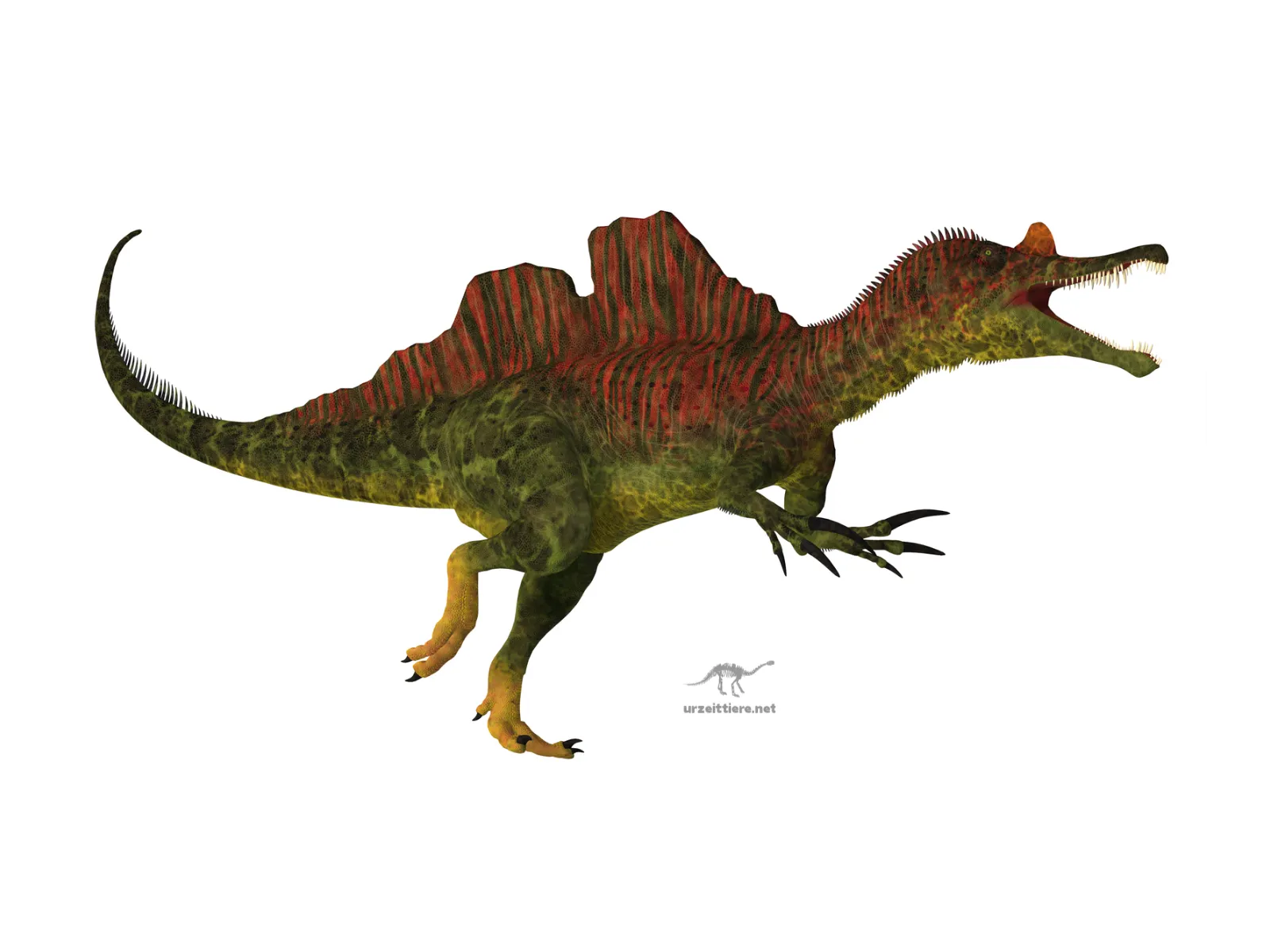
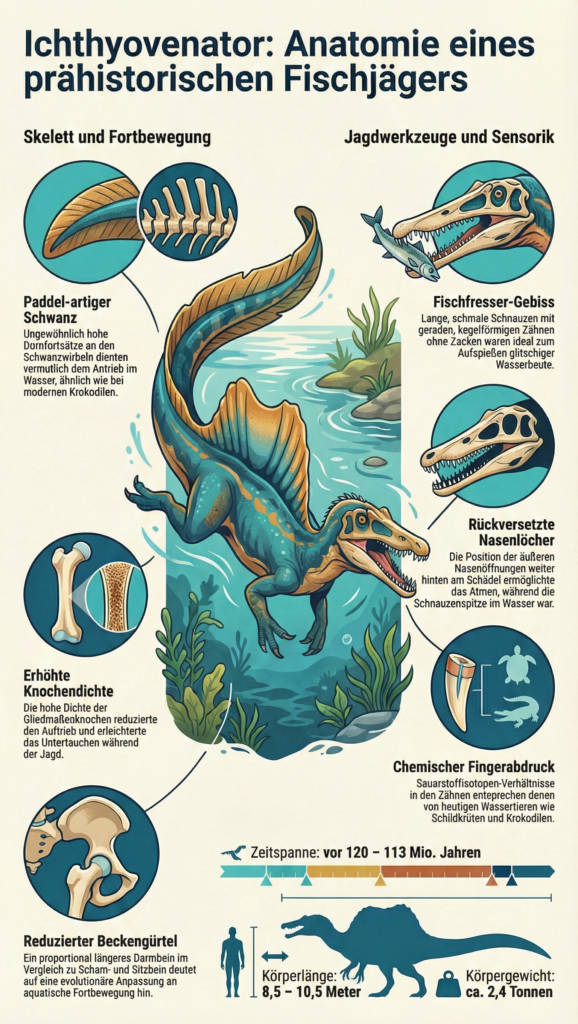
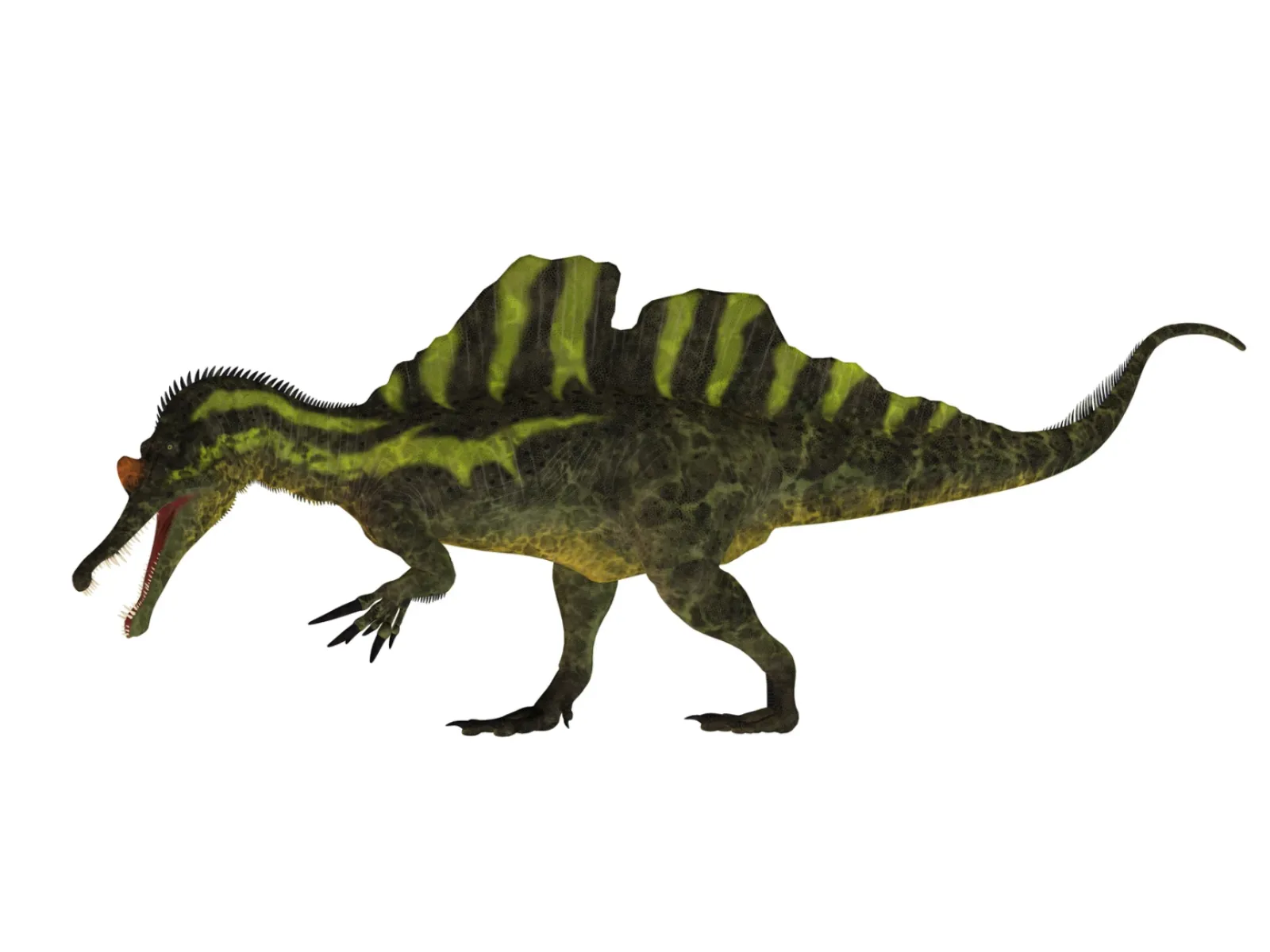
Ichthyovenator was a large theropod that lived in the region of modern-day Laos during the Early Cretaceous Period, about 120 to 113 million years ago. This predatory dinosaur reached impressive dimensions, with an estimated body length of between 8.5 and 10.5 meters and a weight of around 2.4 tons. In terms of size, Ichthyovenator was comparable to its relative Baryonyx from the family Spinosauridae.
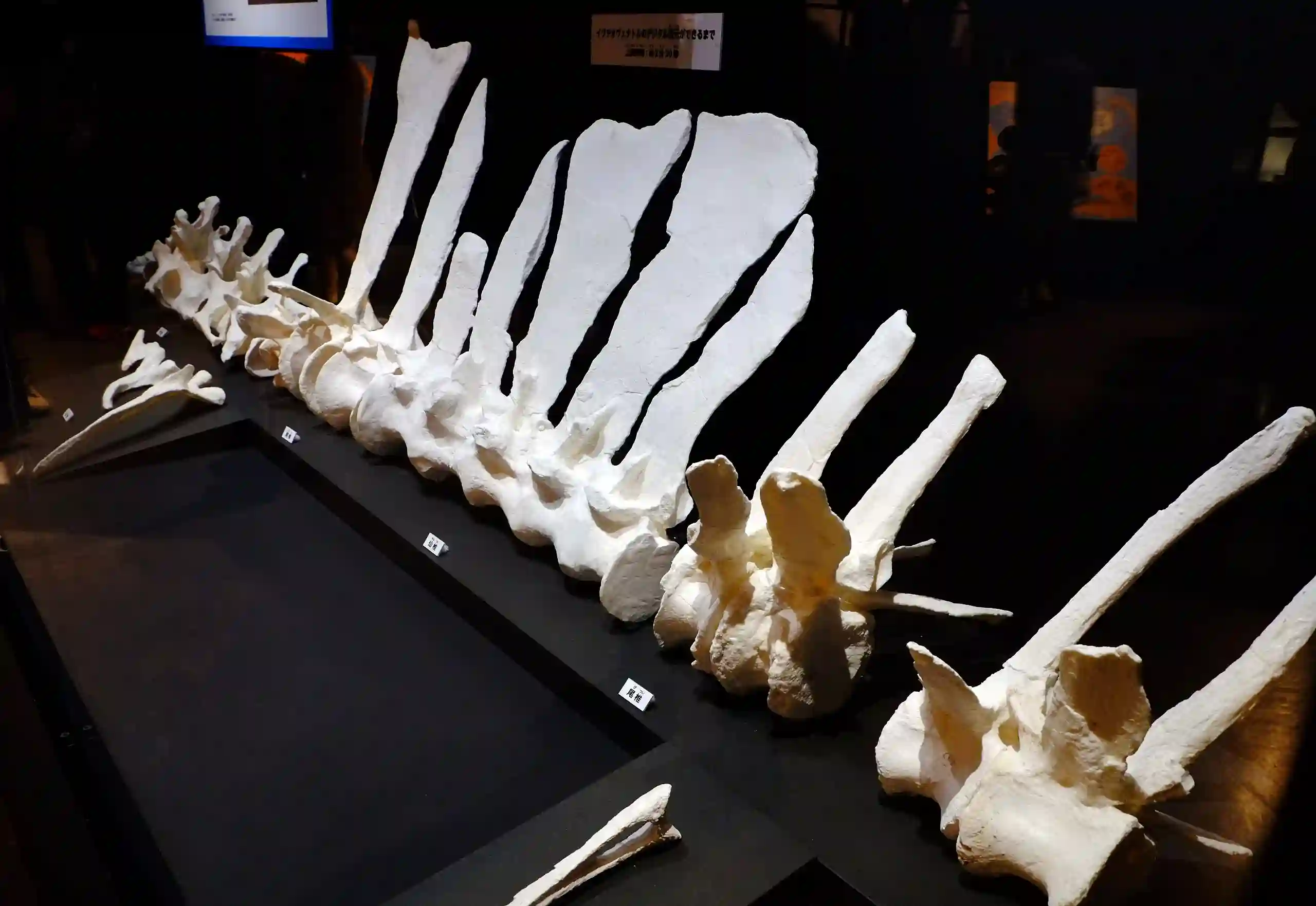
Ichthyovenator's most striking feature was its unusual dorsal sail. Unlike other spinosaurids, Ichthyovenator possessed a unique sinusoidal (wavy) sail that curved downward over the hips and was divided into two separate sections. This characteristic is considered an autapomorphy – a unique derived characteristic – of this genus.
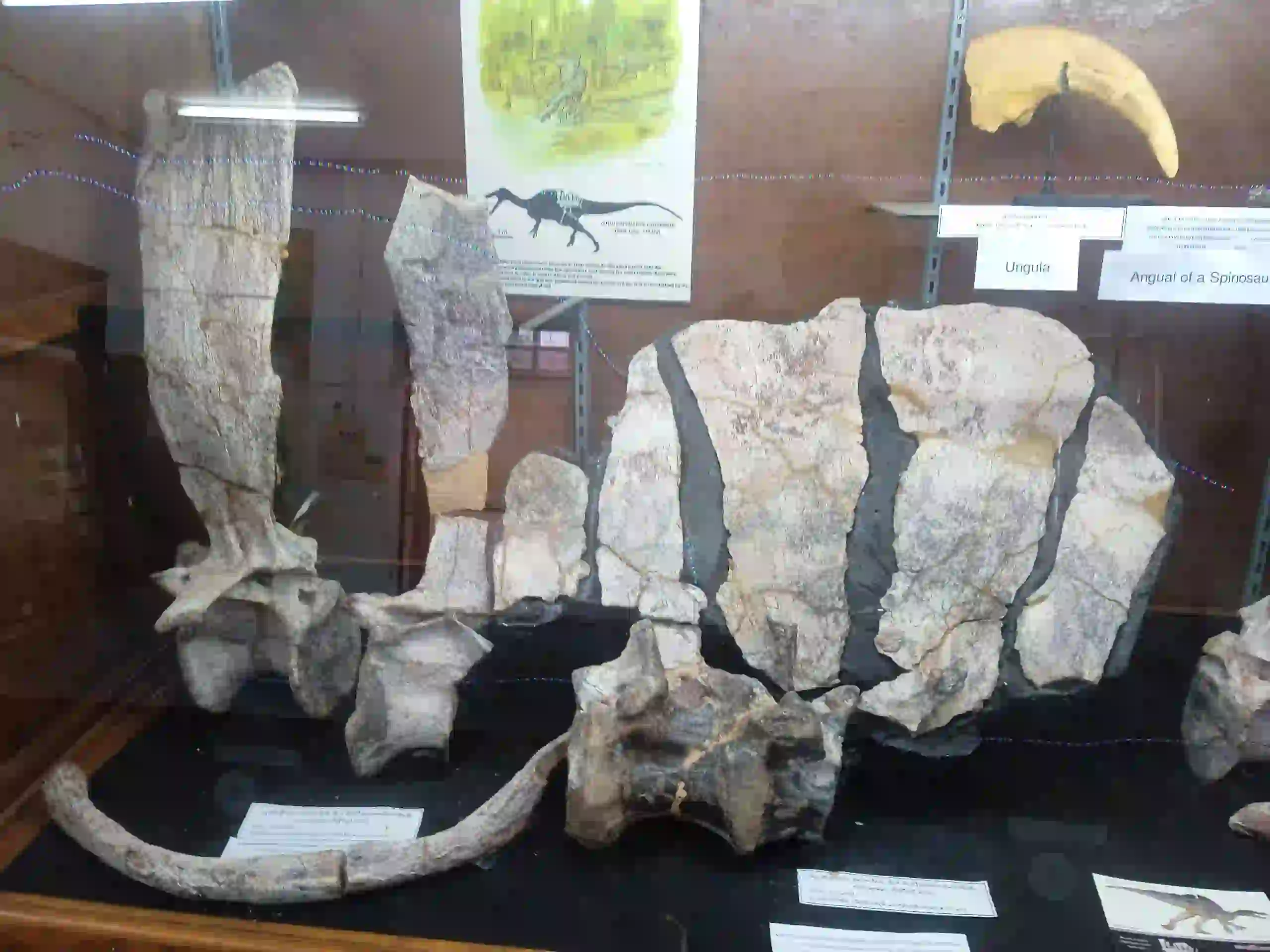
The anterior part of the sail was supported by elongated spinous processes of at least the twelfth and thirteenth dorsal vertebrae. The spinous process of the twelfth dorsal vertebra was particularly high at 54.6 centimeters and widened towards the top, creating a trapezoidal shape. This trapezoidal morphology is similar to that of Vallibonavenatrix, but differs from the typical rectangular spinous processes of other known Spinosauridae. Additionally, the forward or backward tilt observed in Spinosaurus was absent.
The posterior part of the sail formed a lower, rounded structure extending from the sacral vertebrae of the hip, with the apex overlying the third and fourth sacral vertebrae. The first spinous process of the sacrum was noticeably low, which contributed significantly to the overall sinusoidal profile of the reconstructed leaflet.
TL;DR Ichthyovenator short and sweet
Ichthyovenator
| scientific name | Ichthyovenator laosensis |
| Estimated size | Length: 10.5 meters Height: 3 meters Weight: 2.4 tons |
| geological era | Lower Cretaceous |
| Locations | Grès superieurs |
| Order | Saurischia |
| Subordination | Theropoda |
Physical characteristics
| anatomy | Medium-sized, bipedal spinosaur with a long body, short arms, long tail, and prominent dorsal crest |
| Special features | Two separate, wave-shaped dorsal sails on the spine and pelvis |
| locomotion | Two-legged |
| Skin texture | Unknown (fossils show only bone structures) |
| Coloring | Unknown (no color findings) |
discovery
| Explorer | Allain et al. |
| Discovery date | 2012 |
| Meaning of the name | “Fish hunter” (Greek: ichthyo = fish, venator = hunter) |
| Significant fossil finds | Ilium, pubic bone, ischium, ribs and vertebrae. Referenced teeth. |
In paleontology, the ratio of brain to body size, the so-called Encephalization quotient (EQ), used as a rough guide to relative intelligence.
| Intelligence (EQ) | Unknown (no skull or brain structure finds) |
| Social behavior | Unknown (no evidence of herd life or solitary existence) |
| Predators | Unknown (no direct evidence, probably other large theropods in the region) |
Anatomy and special features
Ichthyovenator's teeth, found in later excavations, were straight and conical without serrations. They also had distinct front edges at the base of the tooth crown. Although no skull remains were found, its classification in the family Spinosauridae suggests that it had a long, flat and narrow snout typical of this family.
The middle cervical vertebrae of Ichthyovenator were elongated, slightly wider than they were tall, and progressively shorter towards the back of the neck. They also had well-developed keels on their ventral (lower) surface. It shares these specific features with other Spinosauridae such as Baryonyx, Suchomimus, Sigilmassasaurus and Vallibonavenatrix. Although they had a blade-like shape like Sigilmassasaurus and Baryonyx, the spinous processes of Ichthyovenator's cervical vertebrae were significantly higher.
The spinous processes of Ichthyovenator's caudal vertebrae were unusually high. This morphology strongly suggests that the tail played an important role in aquatic locomotion, similar to modern crocodiles. Another adaptation to aquatic life is Ichthyovenator's pelvic girdle, which has a proportionally longer ilium compared to the pubic bone and ischium. This reduction in the size of the pelvic girdle, combined with the elongation of the spinous processes of the caudal vertebrae, suggests an evolutionary tendency toward increased aquatic locomotion within the Spinosauridae lineage.
Unique sailing function
The distinctive dorsal sail of Ichthyovenator (and other spinosaurids) likely served multiple biological purposes. Primary hypotheses include its use for sexual display, to attract mates, or for species recognition, so that members of the same species can identify each other. The unique sinusoidal, two-part shape of Ichthyovenator's sail would have made it particularly distinctive for these visual signaling purposes.
While the sexual display gesture and species recognition are often proposed as functions, the large surface area of the sail also provides clues for hypotheses about thermoregulation. The distinct sinusoidal and divided morphology of Ichthyovenator's leaflet suggests either a highly specific visual signal or a unique thermoregulatory strategy. The latter would be tailored to its particular species or local environmental conditions.
This raises deeper questions about the specific paleoenvironmental conditions in Laos during the Early Cretaceous that may have favored such a uniquely shaped sail structure, perhaps suggesting subtle niche partitioning, specialized communication, or even different social dynamics compared to other spinosaurids. This highlights the complexity in interpreting the adaptive significance of extinct anatomical features and the potential for multiple, synergistic functions.
Discovery and naming
The first fossil remains of Ichthyovenator were discovered in 2010 at the Ban Kalum site in the Grès supérieurs Formation of the Savannakhet Basin in Savannakhet Province, Laos. The first specimen that became the holotype of the new genus and species Ichthyovenator laosensis consisted of a partially articulated, well-preserved postcranial skeleton without a skull and limbs.
The formal scientific description of Ichthyovenator laosensis was published in 2012 by paleontologist Ronan Allain and his colleagues. Further excavations at the original site in 2012 led to the recovery of additional significant finds, which Allain presented at a conference in 2014. The new fossils included three teeth, the left pubic bone, an almost complete cervical spine, the first dorsal vertebra and seven additional caudal vertebrae.
Despite their fragmentary nature, the fossil remains of Ichthyovenator were considered, at the time of their discovery, to be the most complete known remains of a spinosaurid from Asia, even surpassing the completeness of certain other spinosaurid genera such as Oxalaia from South America.
The genus name Ichthyovenator is derived from a combination of the Greek word “ichthys,” meaning “fish,” and the Latin word “venator,” meaning “hunter.” This literally means “fish hunter" and reflects the dinosaur's presumed main food source. The species name laosensis refers specifically to Laos, where the fossils were discovered. The full species name Ichthyovenator laosensis thus means "Fish hunter from Laos“.
Interactive discovery timeline
Click on a year to view the discovery details.
Diet and hunting behavior
The etymology of Ichthyovenator itself, meaning “fish hunter,” directly reflects its presumed primary diet. The morphology of its teeth - straight, conical and without serrations - is ideal for spearing and holding onto slippery aquatic prey such as fish. This tooth structure is less effective at tearing flesh from larger, struggling land prey.
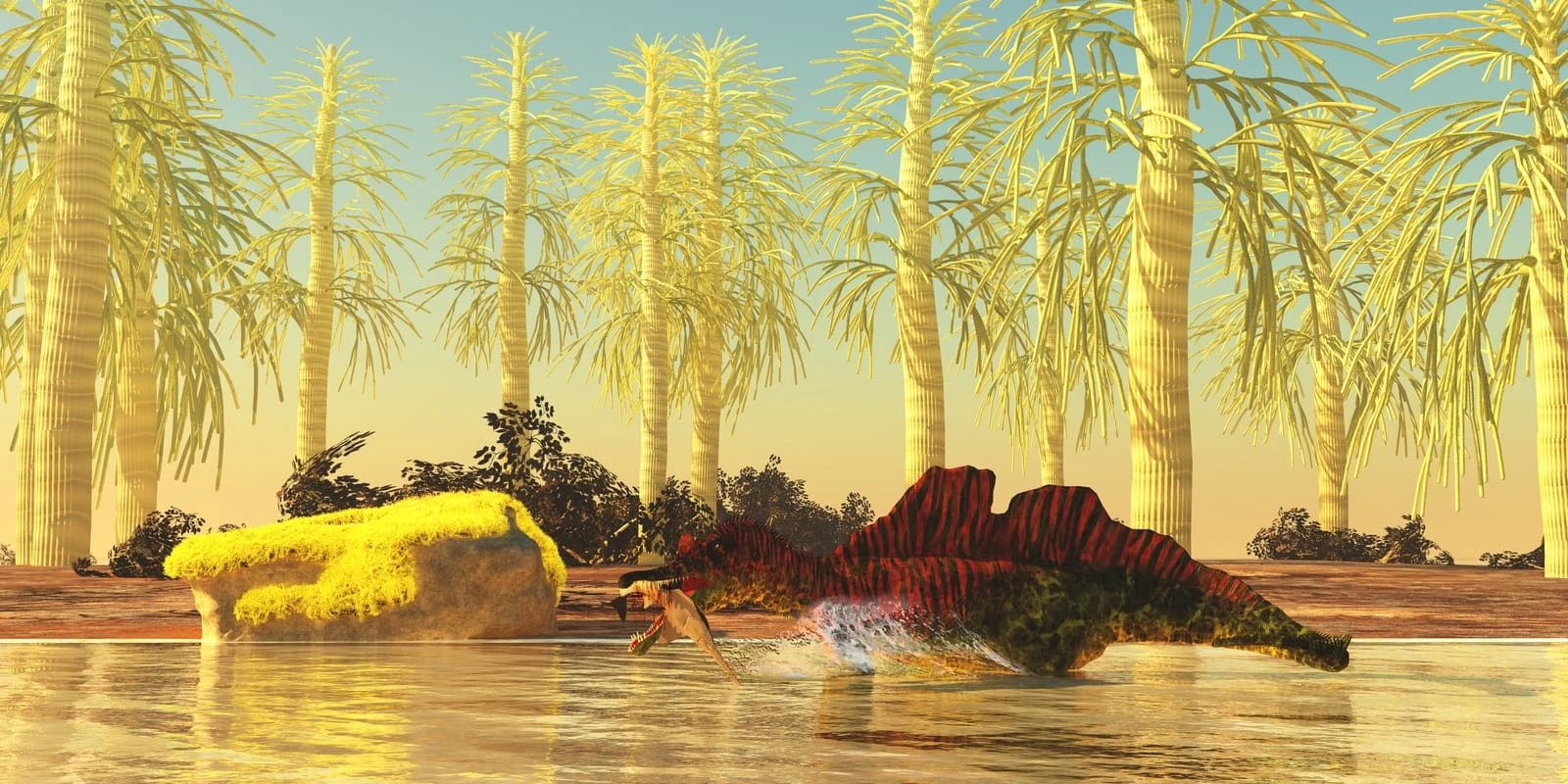
Although the Ichthyovenator skull was not found, conclusions can be drawn from other spinosaurids. It is believed to have had a long, flat and narrow snout, characteristic of this family. Such a snout, which often has rosette-shaped jaw ends and is equipped with pressure-sensitive receptors (as is thought in better-preserved relatives), would have enabled efficient location and rapid capture of fish in aquatic habitats.
Although spinosaurids were primarily adapted to a piscivorous diet, they were likely opportunistic predators. Evidence from other members of the family suggests that they also consumed other prey, including small dinosaurs and pterosaurs. This suggests that it was a flexible dietary strategy that went beyond just fishing.
Habitat and way of life
Compelling fossil evidence strongly suggests that spinosaurids, particularly those from the subfamily Spinosaurinae (to which Ichthyovenator is now included), were clearly adapted to a semi-aquatic lifestyle. An important adaptation in Ichthyovenator is the presence of unusually tall spinous processes on the caudal vertebrae. This morphology is an indication that its tail probably served as a powerful locomotor organ for swimming, similar to the tails of modern crocodiles.
In addition, the anatomy of Ichthyovenator's pelvic girdle, with a proportionally shorter pubic bone and ischium relative to the ilium, supports its aquatic adaptations. This reduction in the size of the pelvic girdle, coupled with the elongation of the spinous processes of the caudal vertebrae, suggests an evolutionary trend toward increased aquatic locomotion within the Spinosauridae lineage. Further evidence from the Spinosauridae family, such as the high bone density in the limbs (which would reduce buoyancy) and the oxygen isotope ratios in the teeth (similar to those of aquatic animals), further support a semi-aquatic lifestyle.
The totality of adaptations observed in Ichthyovenator - including its specialized teeth, its presumably sensory snout, and especially its powerful, high-arched tail for propulsion - has striking parallels with modern semi-aquatic predators such as crocodiles and gharials on. This striking similarity despite large phylogenetic distances is a classic example of convergent evolution.
Classification and evolutionary relationships
As Ichthyovenator 2012 by Allain et al. was scientifically described for the first time, it was assigned to the subfamily Baryonychinae based on a cladistic analysis. At this point it was considered a sister group to the well-known baryonychines Suchomimus and Baryonyx.
Subsequent and more recent phylogenetic analyses, particularly after Allain's announcement of further important fossil finds in 2014, have largely reclassified Ichthyovenator as a primitive member of the subfamily Spinosaurinae. This significant reclassification was driven primarily by the reassessment of specific morphological features, particularly the characteristics of its teeth (straight, conical, unserrated crowns) and the detailed anatomy of its cervical and dorsal vertebrae, which bear strong similarities to the enigmatic genus Sigilmassasaurus.
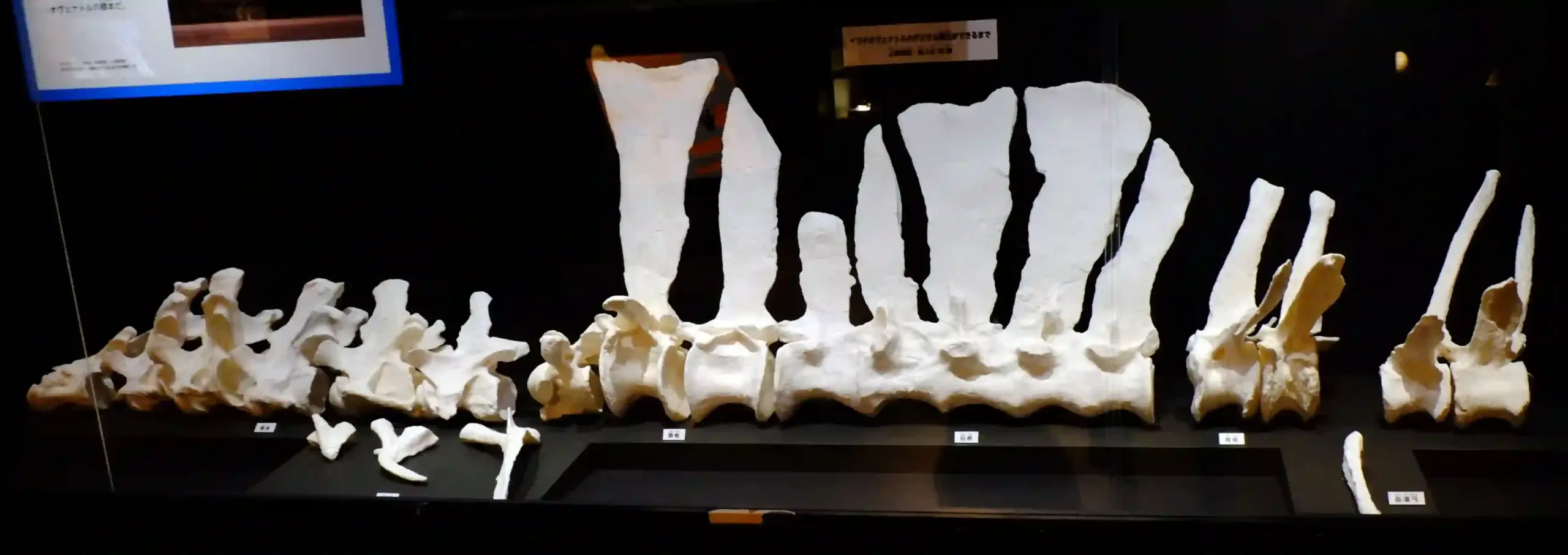
A key factor in Ichthyovenator's reclassification was the striking similarity of its cervical vertebrae to those of Sigilmassasaurus. Common characteristics include elongated, wider than tall vertebral bodies and well-developed keels on their undersides. Although the spinous processes of the cervical vertebrae of Ichthyovenator were higher than those of Sigilmassasaurus, they had a similar blade-like shape. Furthermore, the first dorsal vertebra of Ichthyovenator was found to be nearly identical to the holotype vertebra of Sigilmassasaurus brevicollis, demonstrating a strong morphological connection.
The reclassification of Ichthyovenator suggests that the traditionally clear distinction between Baryonychinae and Spinosaurinae may be more fluid than previously thought, suggesting a mosaic pattern of evolution or even a paraphyletic Nature of the Baryonychinae could indicate. The presence of a combination of characters originally interpreted as baryonychine but later reevaluated as spinosaurine positions Ichthyovenator as a potential transitional form, thereby contributing significantly to a more nuanced understanding of the complex evolutionary relationships within the family Spinosauridae.
Paleoenvironment and distribution
Ichthyovenator lived in the region of modern-day Laos during the Aptian, a period of the Early Cretaceous period about 120 to 113 million years ago. Its fossils were discovered in the Grès supérieurs Formation of the Savannakhet Basin. This geological formation is considered the lateral equivalent of the Khok Kruat and Phu Phan formations in neighboring Thailand. This suggests a larger paleoecological context in the region. The Grès supérieurs formation was the habitat for a diverse and rich flora and fauna. This shows that there was a thriving environment there in the past.
The coexistence of the fauna provides a detailed picture of the ichthyovenator's habitat. It shared its environment with other dinosaur groups, including the large sauropod Tangvayosaurus as well as indeterminate sauropods, Iguanodontia and Neoceratopsia. Traces of theropods, sauropods and ornithopods have also been found in the formation.
The significant presence of aquatic and semi-aquatic organisms supports the suggestion of a fluvial or lake paleoenvironment, which perfectly fits the assumed lifestyle of the Ichthyovenator. These include ray-finned fishes such as Lanxangichthys and Lepidotes, various turtles (Shachemys, Xinjiangchelys as well as indeterminate carettochelyids and trionychids) and bivalves such as Trigonioides and Plicatounio.
The discovery of Ichthyovenator is of utmost paleobiogeographical importance as it is the first clear and definitive spinosaur found in Asia. Although other Asian spinosaurids such as Siamosaurus (1986) and “Sinopliosaurus” fusuiensis (2009) have been named, their taxonomic validity has often been questioned due to their fragmentary nature, as they were mainly known from isolated teeth. The partial skeleton of Ichthyovenator provides concrete evidence for the presence of spinosaurids on the continent.
The confirmed presence of spinosaurids in Asia, a family previously known primarily from Europe, Africa and South America, fundamentally changes our understanding of their global distribution patterns. This discovery opens up two primary hypotheses for the spread of spinosaurids:
- It suggests significant faunal exchange and migration between the supercontinents Laurasia (the northern landmass) and Gondwana (the southern landmass) during the Early Late Cretaceous.
- Alternatively, it could indicate an older, cosmopolitan distribution of spinosaurids on the supercontinent Pangea before its major breakup in the Late Jurassic.
Anatomical similarities between Ichthyovenator and the European genus Vallibonavenatrix also suggest a complex and intricate biogeographic pattern for spinosaurids during the Early Cretaceous, suggesting diverse connections and dispersal routes across ancient landmasses.
Importance for paleontology
Ichthyovenator laosensis is a milestone in the understanding of the Spinosauridae. Its discovery in Laos as the first unambiguous Asian spinosaur not only expanded the range of this unique theropod family but also had profound implications for our models of global faunal distribution in the Cretaceous.
The detailed study of its anatomy, particularly its characteristic sinusoidal, two-part dorsal leaflet and its postcranial adaptations to a semi-aquatic lifestyle, has illuminated the morphological diversity within the Spinosauridae and clarified the evolutionary pathways to specialization for aquatic niches.
The reclassification of Ichthyovenator from the baryonychines to the spinosaurines, based on the discovery of additional diagnostic fossils and a reassessment of morphological characters, illustrates the dynamics of paleontological phylogeny. The similarities with the controversial Sigilmassasaurus underline the role of Ichthyovenator as a key taxon that can help clarify complex relationships within the Spinosaurinae.
In summary, Ichthyovenator is a good example of the evolutionary adaptability of dinosaurs. He continues to play an important role in exploring the mysteries of the evolution and habitat of the Spinosauridae. Ongoing research and the discovery of additional fossils will undoubtedly further deepen our understanding of this “Laos fish hunter” and his prehistoric world.
Image sources:
Vertebra and the lower part of the sacrum: ★Kumiko★, CC BY-SA 2.0, via Wikimedia Commons
Imprints of the vertebrae seen from behind: ★Kumiko★, CC BY-SA 2.0, via Wikimedia Commons
Ichthyovenator laosensis fossils from Savannakhet Dinosaur Museum.: Pescov, CC0, via Wikimedia Commons