Cryolophosaurus

Cryolophosaurus – The “frozen crested lizard”
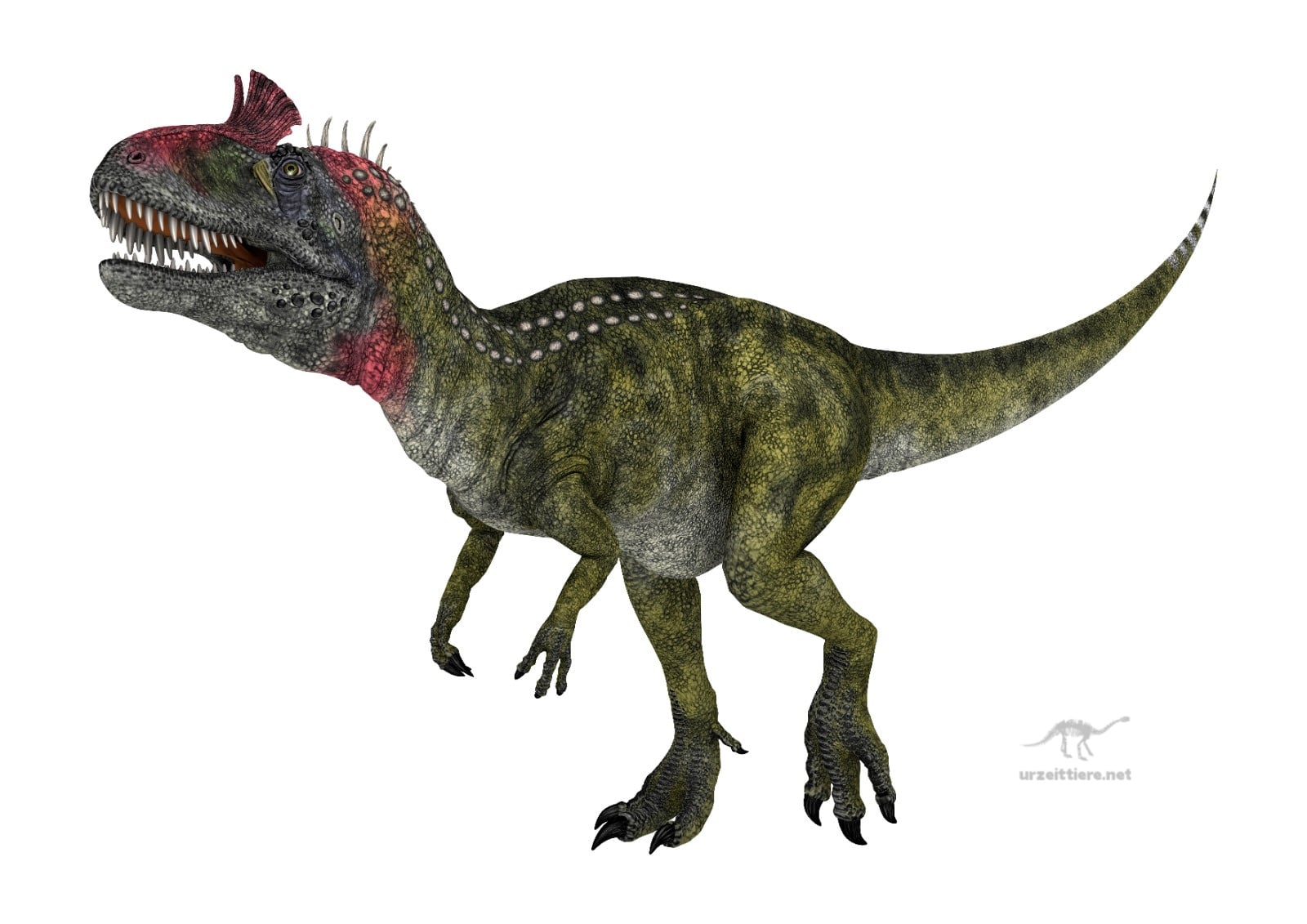
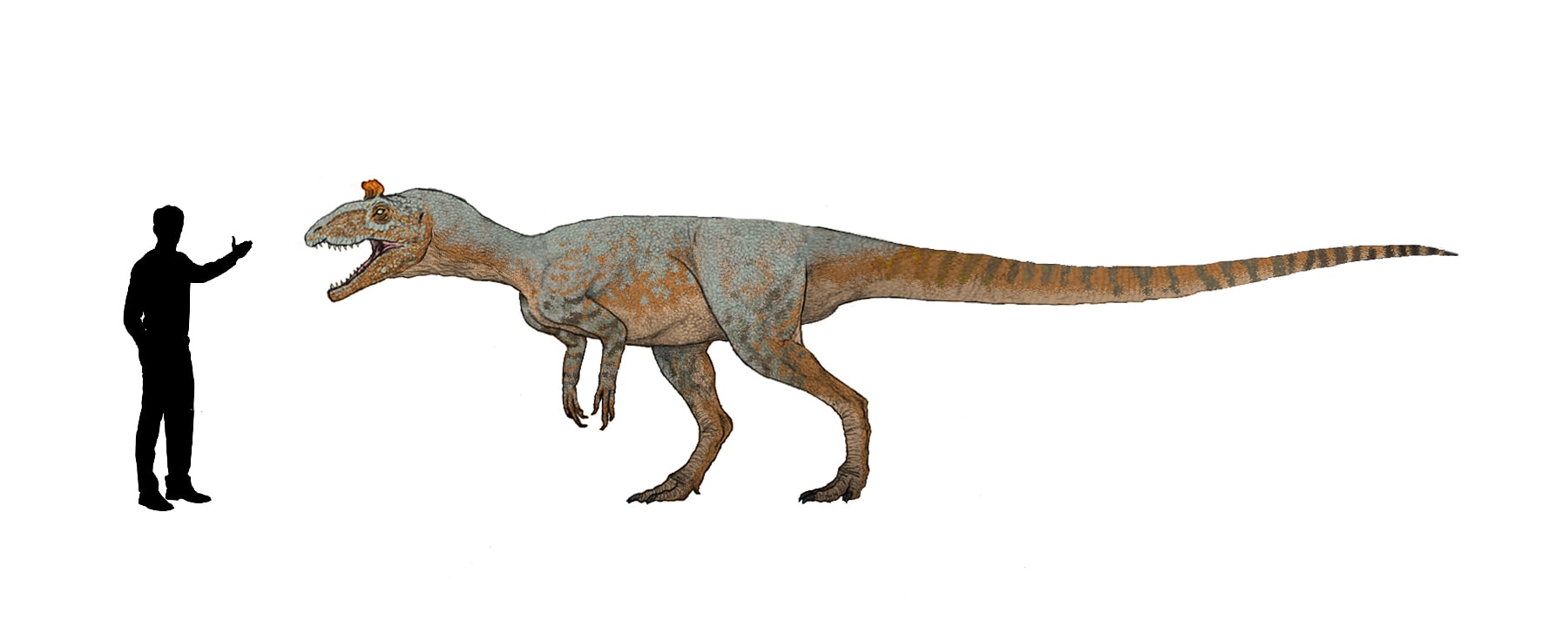
Cryolophosaurus was a 6 to 7 meter long theropod with slender proportions.
It is one of the earliest carnivores found to date. Weighing an estimated 465 kilograms, it is currently the largest known theropod from the Early Jurassic. The specimen found is believed to be a juvenile animal. Adults of this species could therefore have been larger.
Like all theropods, it moved on two legs (biped). He had three fingers armed with claws on his forearms.
| Profile | Cryolophosaurus |
|---|---|
| epoch | Lower Jurassic, 199.3 to 182.7 million years ago |
| Order | Lizard-pelvis dinosaur (Saurischia) |
| Subordination | Theropoda |
| Family | Neotheropoda |
| group | |
| genus | Cryolophosaurus |
| Art | Cryolophosaurus ellioti |
| Height | 2 meters |
| length | 6 – 7 meters |
| Weight | 485 kilograms |
| Locations | Antarctica; Hanson Formation |
Nickname “Elvisaurus”

Its parietal crest, which is unusual for a theropod, gave it the pet name “Elvisaurus”. The bizarre comb is actually reminiscent of Elvis Presley's curls.
Antarctica's first dinosaur
In 1986, the remains of an armored dinosaur were discovered on James Ross Island, but it was first characterized and given the official name in 2006 Antarcto Pelta olivero.
Cryolophosaurus, on the other hand, is the first theropod found in Antarctica and was scientifically described and named in 1994. Although it was uncovered after Antarcto Pelta, it was previously named.
History and discovery
It was discovered and excavated in 1991 at an altitude of 4100m!, only 640 km from the South Pole.
The excavation was carried out by Augustana College professor William R. Hammer and Ohio State University geologist David Elliot.
They examined separate outcrops near Beardmore Glacier.
This separation of the study had a practical reason: the two scientists could share the logistical costs.
The two researchers found the fossils in the siliceous siltstone of the Hanson Formation on Mount Kirkpatrick. It is one of only two rich, dinosaur-bearing rock formations in Antarctica known to this day. The second is the Snow Hill Island Formation.
The Hanson Formation is dated to the Pliensbachian (194-188.5 million years ago) of the Early Jurassic.
Since the discovery of the two above, other species have now been found.
Firstly, the long-necked Glacialisaurus hammeri. First named by Nathan Smith and Diego Pol in 2007.
On the other hand, the approximately 1.5 meter long Trinisaura santamartaensis, which was given a name in 2013 by Rodolfo Aníbal Coria and colleagues.
In the time of Cryolophosaurus, Antarctica looked completely different
The location of Cryolophosaurus during its lifetime was 1,000 km further north in the Lower Jurassic. It belonged to what was then the supercontinent Gondwana. The global climate was milder than today. In addition, the southern part of Gondwana was closer to the equator.
However, there were months with temperatures near or below 0 degrees Celsius, which suggests to scientists that Cryolophosaurus was a warm-blooded animal.
Its habitat was probably forested and covered with dense plant material. Paleontologists suspect a great diversity of species.
Earthquakes and volcanic eruptions were not unusual for the living creatures of this region, as the breakup of the Gondwana continent led to increased volcanic and tectonic activity.
Diet patterns
It is possible that this carnivore preyed on Glacialisaurus, particularly young and diseased specimens.
However, since only very few dinosaur species are known from Antarctica, this assumption remains only speculation.
Scientists do not rule out the possibility that Cryolophosaurus ellioti plundered carcasses of dead animals.
Interesting facts about Cryolophosaurus ellioti
• Cryolophosaurus ellioti is the second dinosaur found in Antarctica.
• it is the tallest dinosaur found; it was discovered at an altitude of 4100m.
• Its discovery site is only 640 km from the South Pole.
• Its name comes from the word “Frozen”.
• Unlike other theropods, its cranial crest does not run parallel to the sides of the skull but points curved forward (“Elvisaurus”).
Image sources: Cover photo: urzeittiere.net
Skull: By WehaveaTrex – Own work, CC BY-SA 4.0, https://commons.wikimedia.org/w/index.php?curid=100416434
Size comparison: From Dibrangosaurus - Own work, CC BY-SA 4.0, https://commons.wikimedia.org/w/index.php?curid=64319311