
AMARGASAURUS

The Lizard of La Armaga
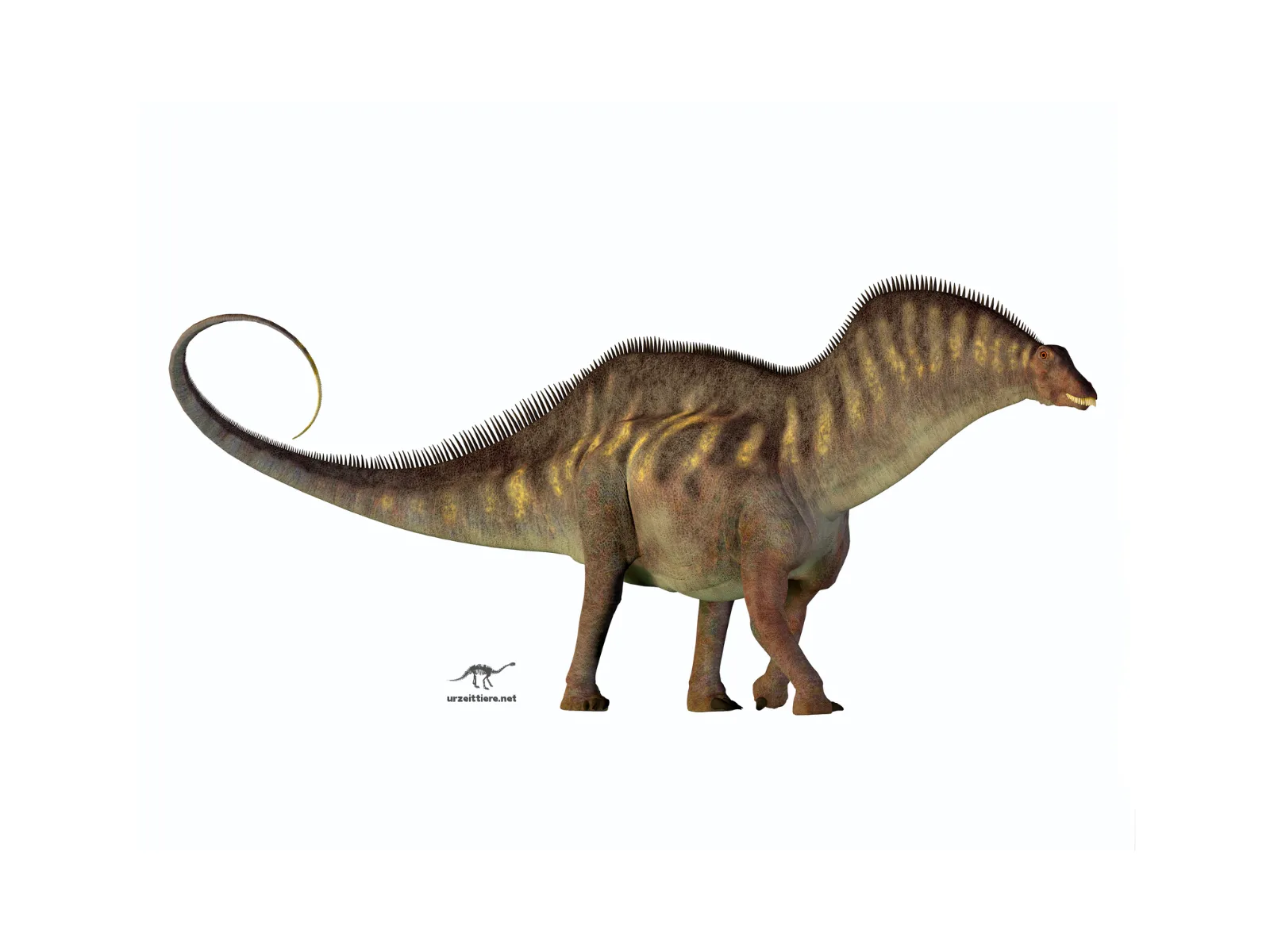
This dinosaur was named Amargasaurus because of the location where the fossil was found in the La Armaga Gorge in Argentina.
So far only one skeleton of this dinosaur has been discovered, but it was relatively complete and in good condition.
Discovered parts of the skull of sauropods are rare, but for this fossil scientists found the back of the head, as well as most of the skeleton of the trunk and limbs.
Unfortunately, not many parts of his tail bones could be recovered. These were probably damaged by erosion in the past.
| Profile | Amargasaurus |
|---|---|
| epoch | Lower Cretaceous 145 million to 100.5 million years ago |
| Order | Sauropodomorpha |
| Subordination | Sauropods (Sauropoda) |
| Family | Diplodocoidea |
| group | Dicraeosauridae |
| genus | AMARGASAURUS |
| Art | AMARGASAURUS cazaui |
| Height | 2.3 meters |
| length | 9.5 – 12 meters |
| Weight | 4 – 5 tons tons |
| Locations | Argentina |
Amargasaurus was a quadruped, had a small head, a long neck and a very long tail.
Its front legs were shorter than its hind legs. All four extremities had elephant-like, five-toed feet. One toe on each foot had a thumb claw, probably for protection. It may have used its whip-like tail to ward off enemies.
It belonged to a strange group of sauropods called “dicraeosaurs.”
Strange because Dicraeosauridae differ from other sauropods by their relatively short neck and small body size, giving rise to strange shapes.
Special features in appearance
The double-row neck spines of Amargasaurus represent an extreme example of these strange shapes.
It had two rows of spines that protruded along its neck and body and joined in a row at its tail.
The function of these spines is not yet fully understood and is debated among experts.
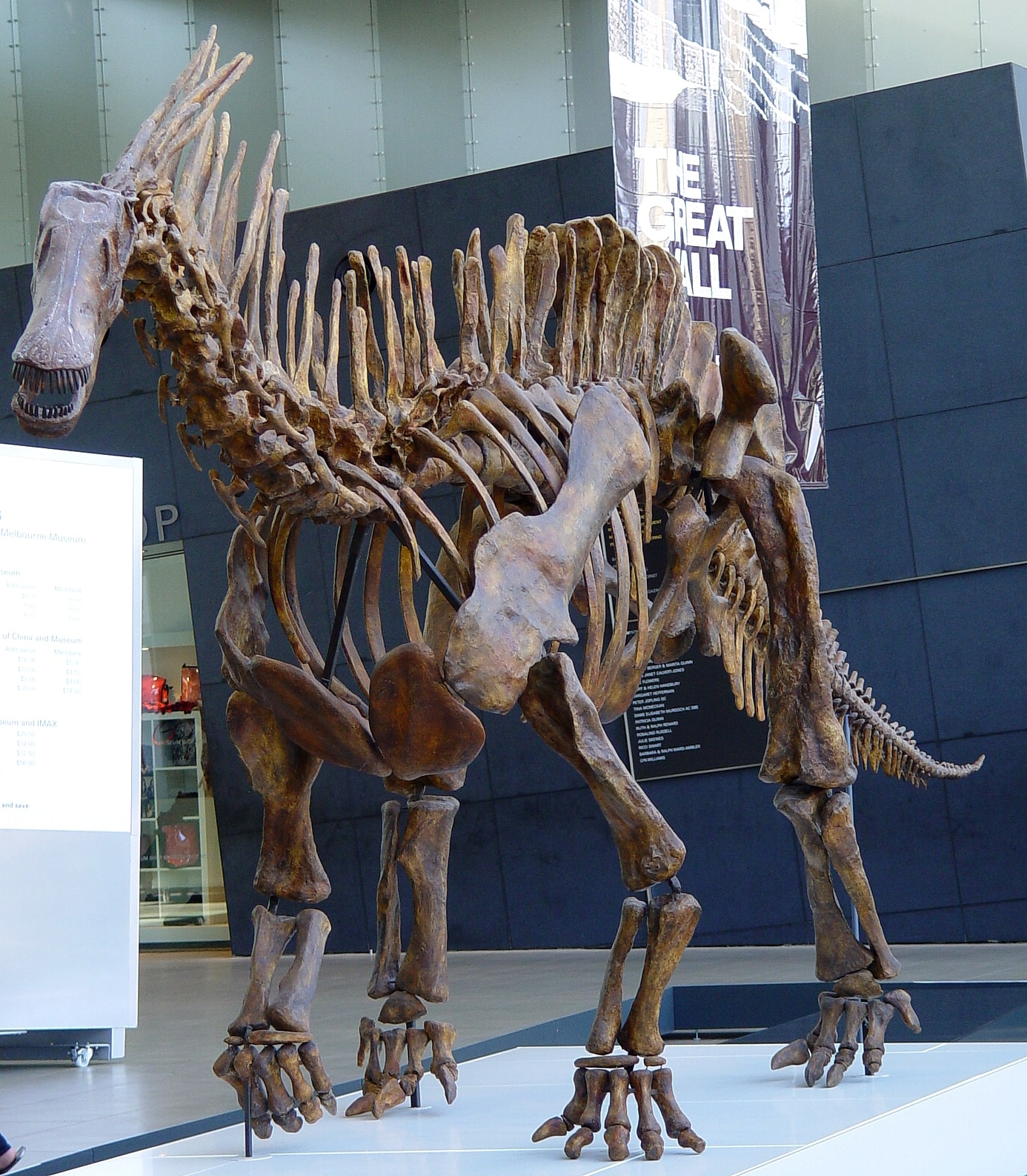
It is possible that a skin tissue ran between the spines, forming a double sail.
If so, this sail may have been a thermoregulatory structure used to absorb and release heat.
Other researchers think it was used for mating and dominance rituals.
However, since the distance between the two rows was only 3 to 7 cm, the existence of two parallel sails seems unlikely.
However, some scientists do not believe that it had sails.
Instead, assume that he simply rustled those spines to make a sound by shaking his head back and forth violently.
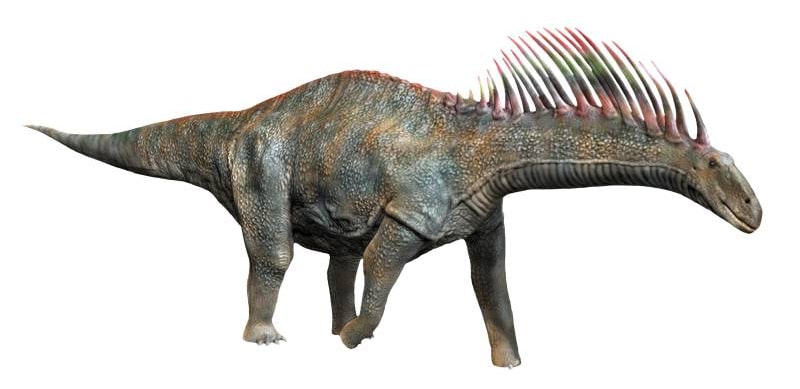
The latest research suggests that these spines had a horn coating. If this dinosaur lowered its head down, these spines would emerge like a pincushion.
After reconstructing the anatomy of his cervical vertebrae, the neck was tilted slightly downwards, so that in a neutral position the snout would have been only 80 cm above the ground.
Nutrition
It is believed that Amargasaurus traveled in herds and moved on once food supplies were exhausted.
It had blunt teeth that were suitable for stripping leaves.
It is believed that he swallowed these leaves whole without chewing.
Amargasaurus may have had gastroliths (stomach stones) in its stomach to facilitate digestion of this tough plant material.
Amargasaurus shared its environment with other sauropods. They include:
- Zapalasaurus
- Amargatitanis
- Amargastegos (an undetermined stegosaur from the La Amarga Formation in Argentina)
- and Ligabuino
Bildquellen: © N. Tamura | [email protected] | http://spinops.blogspot.com | http://paleoexhibit.blogspot.com, CC BY-SA 4.0 https://creativecommons.org/licenses/by-sa/4.0, via Wikimedia Commons
Sainterx, Public domain, via Wikimedia Commons